

Stretch Wrapping Machine for Pharmaceuticals:2026 Guide
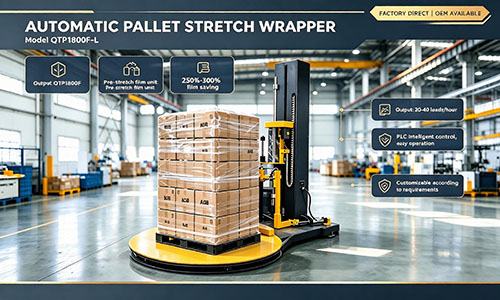
Quick definition:A stretch wrapping machine for the pharmaceutical industry is a pallet wrapping machine system configured to secure cartons,drums,and cases of medicines for storage and transport while meeting the sector's hygiene,load-stability,and documentation expectations—typically featuring programmable containment force,five-sided dust and pest coverage,easy-clean construction,and data logging that supports GMP-style validation.
Pharmaceutical packaging is one of the fastest-growing industrial markets in the world.Grand View Research values the global pharmaceutical packaging market at USD 182.2 billion in 2026,expanding at 9.9%CAGR through 2033,while the pharmaceutical logistics market it feeds is worth USD 117.3 billion in 2026 and growing at 8.5%CAGR.Every dollar of that product crosses a warehouse dock on a pallet—and how that pallet is wrapped determines whether medicines arrive intact,uncontaminated,and audit-ready.
Yet pharma is not"just another industry"for stretch wrapping.Load values are extreme,cartons are light and crushable,regulators expect documented repeatability,and temperature-sensitive volumes keep climbing.This guide explains what makes pharmaceutical pallet wrapping different,the seven machine features that matter most,four plant scenarios with recommended configurations,and a six-step selection framework for procurement teams and packaging engineers.
1.Why Pharmaceutical Pallet Wrapping Is Different
Four characteristics separate pharmaceutical wrapping from general manufacturing:
1.1 Extreme value density
A single pallet of finished pharmaceuticals can easily be worth six figures,and pallets of biologics or specialty injectables can exceed that several times over.The financial exposure from one shifted load,one crushed carton layer,or one contamination event dwarfs the cost of the wrapping equipment itself—which is why pharma buyers evaluate wrappers as risk-control assets,not commodities.
1.2 Light,crushable loads
Finished medicines ship in folding cartons and cases that are surprisingly delicate:typical finished-goods pallets weigh only 150–400 kg,with low inter-carton friction and limited crush strength.The wrapping challenge is achieving load stability without deforming the cartons—a balancing act that generic high-tension wrapping gets wrong.
1.3 Hygiene and contamination control
Under FDA 21 CFR Part 211 and EU GMP/GDP frameworks,anything entering the product environment must not introduce contamination.In practice,that means"household clean"handling:no dangling film tails that collect dust,no open pathways for pests or moisture during transit,and equipment finishes that can be cleaned and inspected.Audit findings about transit packaging are avoidable—and expensive.
1.4 Documentation and repeatability
GMP culture expects every process to be repeatable and provable.Wrap force,wrap pattern,and machine settings increasingly need to be recorded,locked against unauthorized changes,and retrievable for QA review.A stretch wrapper in a pharma plant is treated much closer to process equipment than to warehouse machinery.
2.Seven Machine Requirements for Pharmaceutical Applications
Use this checklist when writing your specification or evaluating quotations:
Hygienic construction—Smooth epoxy-painted or stainless-steel surfaces,enclosed cable routing,and no exposed lubrication points above the load.If the machine sits near controlled corridors,specify a washable finish and at least IP54-rated electrical enclosures.
Programmable,consistent containment force—Digital tension control delivering repeatable wrap force cycle after cycle(target±5%variation).Validation requires the machine to do exactly the same thing every time,on every shift.
Gentle-load handling—Soft-start rotation,low pre-load tension,and zoned tension control(lighter force on upper layers)to protect cartons.A powered pre-stretch carriage at 200–300%is essential:it extracts stability from the film itself rather than from brute tension,and typically cuts film consumption by 30–50%.
Five-sided coverage options—A top sheet dispenser or top-wrap cycle creates a dust,moisture,and pest barrier for warehousing and long-haul transit—particularly valuable for export freight and temperature-controlled staging.
Cold-environment rating—For refrigerated docks and cold chain staging:control-cabinet heaters,low-temperature lubricants,and cold-rated photoelectric sensors,typically rated to−10°C or below.The pharmaceutical cold chain market is growing at roughly 9.9%per year(PW Consulting,2026),so this option is moving from niche to mainstream.
Recipe management and data logging—Password-locked wrap recipes per SKU,cycle counters,and PLC/Ethernet connectivity to export cycle records to your MES or batch documentation.This is the backbone of wrap-process validation.
Safety and compliance documentation—CE marking,ISO 12100 risk assessment,interlocked guarding for automatic machines,and a documentation package that supports IQ/OQ/PQ qualification activities.
3.Application Scenarios:Pain Points,Solutions,Recommended Machines
Scenario A—High-Volume OTC/Solid-Dose Manufacturer
Profile:One or two product families,uniform 48×40 in pallets of cartons,25–40 pallets/hour across two or three shifts.
Pain points:Throughput keeps pace with the palletizer;labor cost per pallet;wrap consistency across shifts(a loose film tail or crushed top layer triggers a QA hold).
Recommended configuration:An online rotary arm stretch wrapper integrated downstream of the palletizer,with automatic film clamp/cut/wipe-down,250%powered pre-stretch,zoned tension control,and cycle data fed to the plant MES.The rotary arm keeps light cartons stationary while the film carriage orbits—safer and faster than rotating the load at this volume.For the inline-vs-standalone decision logic,see our online vs offline stretch wrapping machine comparison.
Scenario B—Biologics&Cold Chain Distribution
Profile:Temperature-sensitive product staged in refrigerated docks(2–8°C)or frozen areas,mixed destinations,8–15 pallets/hour,elevated security requirements.
Pain points:Condensation forming on loads,film cling and carriage performance degrading in the cold,strict limits on dock door-open time,and pilferage risk on high-value shipments.
Recommended configuration:An automatic turntable or rotary arm wrapper with a cold package(cabinet heater,cold-rated sensors and lubricants),an opaque security film option to conceal contents,and a top sheet dispenser for a five-sided moisture and dust barrier.Fast,single-button cycles minimize staging time outside the cold room.Where cold,dry air causes static build-up,specify compatibility with anti-static films to reduce dust attraction.
Scenario C—API&Bulk Pharmaceutical Ingredients
Profile:Drums,fiber kegs,and lined sacks of active pharmaceutical ingredients;heavy loads of 500–1,500 kg;dusty production areas;long export transit by sea.
Pain points:Cylindrical drums shift and"walk"during transport;dust must be contained in both directions(product out,contaminants out);high containment force is needed for ocean freight;operator safety around heavy pallets.
Recommended configuration:A heavy-duty rotary arm(cantilever)stretch wrapper with a reinforced mast,a film roping/banding device that locks drums firmly to the pallet deck,a high-tension carriage for bottom wraps,and full perimeter safety fencing.The rotary arm architecture is the correct choice here:heavy or slightly unstable loads stay stationary while the film moves.See our turntable vs rotary arm comparison for the engineering trade-offs.
Scenario D—CMO/Contract Packager(Multi-SKU)
Profile:Dozens of SKUs for multiple brand owners,pallet heights and weights changing daily,10–20 pallets/hour,frequent client QA audits.
Pain points:Changeover time between SKUs;proving per-SKU process control to client auditors;avoiding wrap defects that trigger client complaints.
Recommended configuration:A standalone automatic(or high-specification semi-automatic)turntable wrapper with 10+password-locked recipes,digital tension readout,and printed or electronic cycle records for every pallet.Specify a conveyor-ready frame so the machine can be integrated into an inline system later without replacement—contract packagers frequently scale into automation as client volumes grow.
Frequently Asked Questions
Q:What is the best stretch wrapping machine for the pharmaceutical industry?
A:There is no single"best"machine—it depends on your load profile and volume.High-volume lines with uniform cartons suit online rotary arm systems(30–100+pallets/hour).Heavy API drums and unstable loads need heavy-duty rotary arm wrappers.Multi-SKU CMOs do best with standalone automatics with password-locked recipes.In all cases,non-negotiables are consistent programmable containment force,hygienic construction,and data logging for validation.
Q:Can a stretch wrapper be used in a GMP or cleanroom-adjacent environment?
A:Yes,with the right specification.Most pharmaceutical plants wrap pallets in warehouse or shipping zones under GDP rather than inside cleanrooms.Where the machine sits near controlled corridors,specify smooth epoxy or stainless-steel finishes,enclosed components,IP54-rated electrics,and no exposed lubrication points.The machine can then be qualified as support equipment within your validation framework.
Q:How do you wrap light pharmaceutical cartons without crushing them?
A:Use a powered pre-stretch carriage at 200–300%so the film's elastic recovery provides containment instead of raw tension,apply zoned tension control with lighter force on upper layers,enable soft-start rotation,and select an appropriate film gauge.Verify results with a containment force gauge—finished-carton pallets typically need only 4–8 lbs(18–36 N)of containment force,not maximum tension.
products
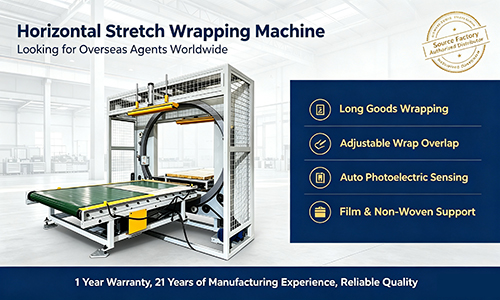
Horizontal Stretch Wrapping Machine SP1000 for Pipes
view more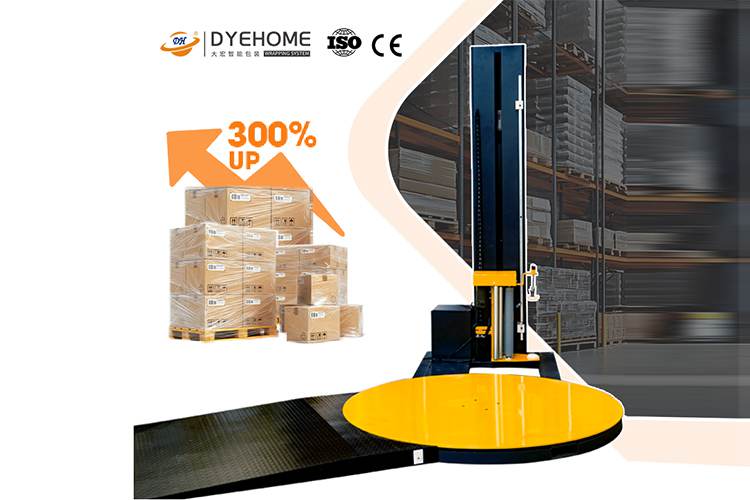
Pallet Stretch Wrapping Machine
view more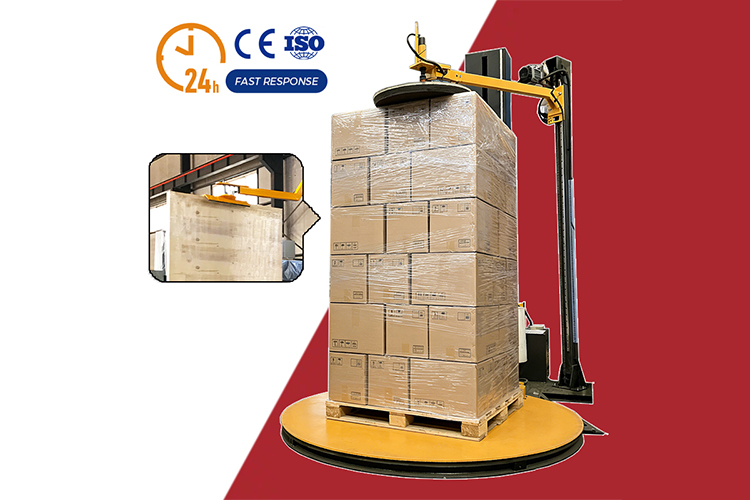
Top Press Pallet Stretch Wrapping Machine
view more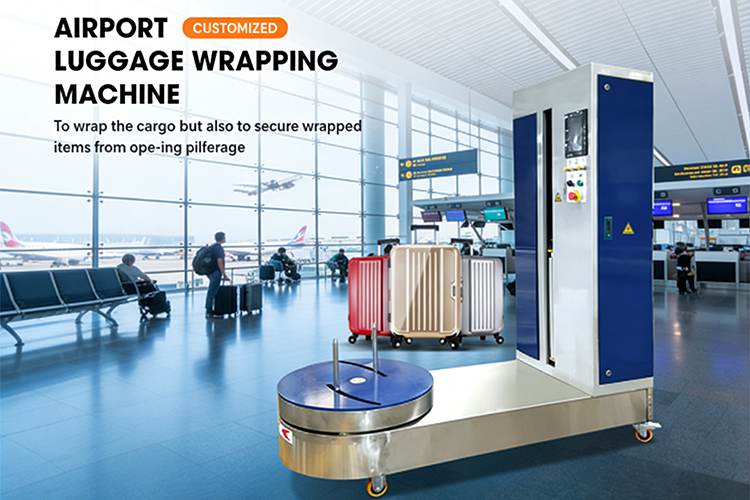
Luggage Wrapping Machine for Airports
view more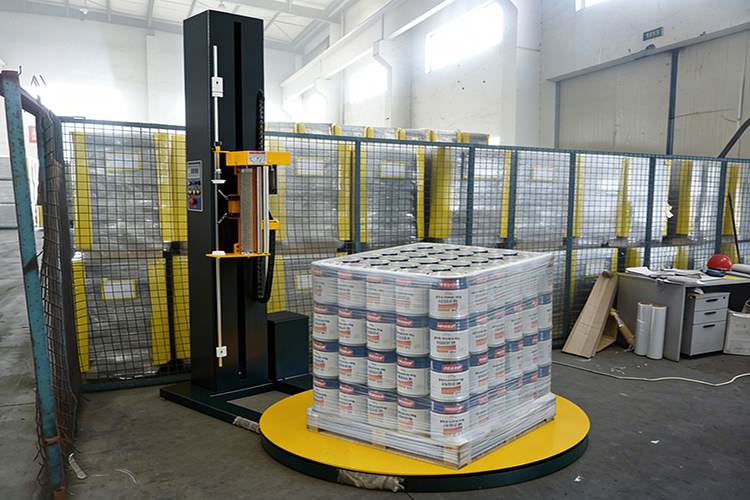
Pallet Stretch Wrapping Machine for Canned Goods
view more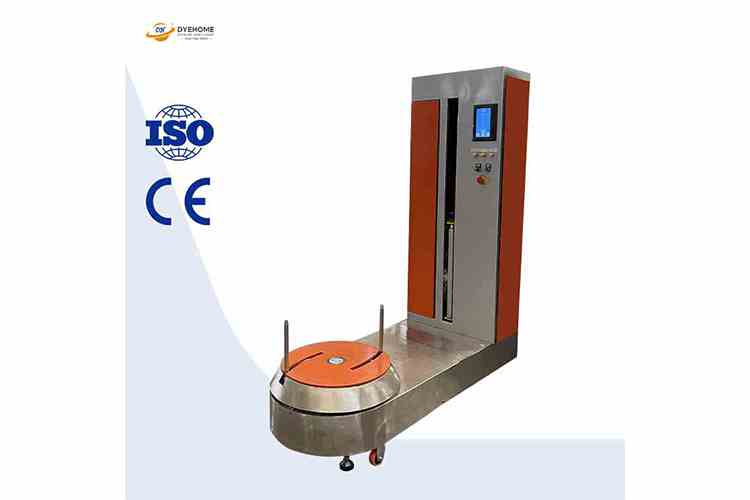
Airport Self-Service Luggage Wrapping Machine
view more
Cantilever wrapping film packaging machine
view more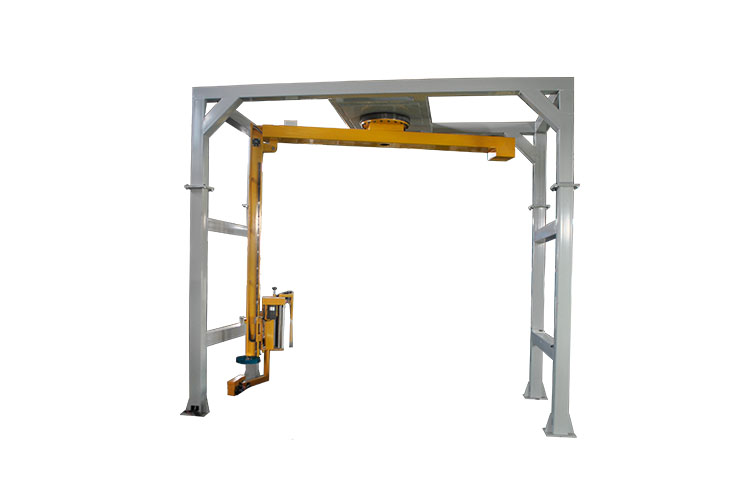
Gantry fully automatic cantilever wrapping machine
view more
 Shandong Dyehome Intelligent Equipment Co.,Ltd
Phone:0086-17362172587
Whatsapp:+8617362172587
Email:machinedyehome@gmail.com
Add:Building 62, 3000 Meili East Road, DmiPark, Wujiapu Street, Huaiyin District, Jinan City,Shandong Province
Jinan Jiasen Packaging Equipment Co., LtdPhone:0086-15665802370
Add:High-end Equipment Manufacturing Industrial Park, East Industrial New Town, Ancheng Town, Pingyin County, Jinan City, Shandong Province
Shandong Golden Pack Intelligent Equipment Co.,LtdPhone:0086-15662690213
Add:High-end Equipment Manufacturing Industrial Park, East Industrial New Town, Ancheng Town, Pingyin County, Jinan City, Shandong Province
YoursIndustry
OurSolutions
OurServices
OurInformation