

Stretch Wrapping Machine for Automotive Parts:2026 Industry Guide
Automotive parts packaging is a$9.96 billion global market in 2025,projected to reach$14.87 billion by 2034 at a 4.56%CAGR.From engine blocks and transmission assemblies to brake calipers and electronic control units,automotive components demand packaging that protects against vibration,corrosion,moisture,and impact during long-distance transit.Yet nearly 50%of all in-transit damage stems from ineffective stretch wrapping—making the choice of wrapping equipment one of the highest-impact decisions in your end-of-line operation.
This guide breaks down the best stretch wrapping machines for automotive parts across three supply chain segments—OEM manufacturing,tier supplier distribution,and aftermarket logistics—with specific machine recommendations,key specifications,and ROI data to help you make a confident purchasing decision.
Why Automotive Parts Demand Specialized Stretch Wrapping Solutions
Unique Packaging Challenges in the Automotive Supply Chain
Automotive parts are not uniform cardboard boxes.They present some of the most demanding packaging scenarios in industrial logistics:
Irregular geometries:Engine blocks,exhaust manifolds,and suspension components have sharp edges,protrusions,and uneven surfaces that puncture standard film
High weight density:A single pallet of brake rotors or steel stampings can exceed 2,000 kg,requiring wrappers with heavy-duty turntables and reinforced frames
Surface sensitivity:Machined surfaces,polished chrome parts,and electronic modules require controlled film tension to prevent surface marring
Corrosion risk:Ferrous components are vulnerable to moisture-induced corrosion during ocean freight or humid warehouse storage
Mixed-load pallets:Aftermarket distributors routinely ship pallets combining small boxes,medium cartons,and bulky items—requiring adaptable wrap patterns
Key Insight:A pallet wrapper designed for beverage or general cargo will underperform on automotive loads.The best stretch wrapping machine for automotive parts must handle sharp edges,heavy weights,and mixed-load configurations—all while maintaining consistent containment force.
Top 3 Machine Types for Automotive Parts Wrapping
1.Turntable Stretch Wrapper—Best for Standard OEM Pallets
How it works:The pallet sits on a rotating turntable while the film carriage travels up and down the mast,wrapping the load in a spiral pattern.
Best suited for:
Engine and transmission pallets(uniform,heavy loads)
Tier 1 supplier outbound shipments to OEM assembly plants
High-volume production lines with consistent pallet patterns
Key specifications to look for:
|
Parameter |
Recommended Range |
|
Turntable diameter |
1,650–2,000 mm |
|
Load capacity |
2,000kg |
|
Turntable speed |
8–15 rpm(variable) |
|
Pre-stretch ratio |
150%–350%(powered) |
|
Film carriage |
Motorized pre-stretch with dancer roller |
Why it works for automotive:Turntable wrappers deliver consistent,repeatable wrap patterns ideal for standardized OEM pallet flows.Models with powered pre-stretch carriages(250%+)reduce film consumption by up to 22–29%compared to manual or passive systems,directly cutting per-pallet packaging costs on high-volume lines.
Dyehome recommendation:The T1650FZ turntable wrapper with 2,000 kg capacity and 250%powered pre-stretch is designed for heavy industrial loads including automotive engine blocks and transmission assemblies.
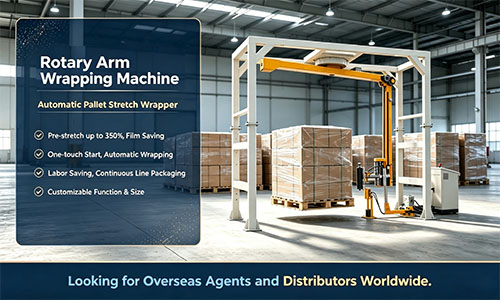
2.Rotary Arm Stretch Wrapper—Best for Heavy,Unstable,or Oversized Loads
How it works:The pallet remains stationary while a rotating arm sweeps around it,applying film.This eliminates the risk of top-heavy loads tipping during rotation.
Best suited for:
Tall pallets of body panels(hoods,fenders,door skins)
Unstable or overhanging loads that cannot spin on a turntable
Integrated conveyor lines in OEM plants
Wrapping of flatbed-loaded components(axles,chassis sub-assemblies)
Key specifications to look for:
|
Parameter |
Recommended Range |
|
Arm rotation speed |
10–18 rpm |
|
Maximum wrap height |
2,000–2,400 mm |
|
Film carriage type |
Powered pre-stretch(150%–350%) |
|
Load capacity |
No turntable limit(forklift-loaded) |
|
Integration |
PLC+conveyor I/O for auto lines |
Why it works for automotive:Many automotive parts pallets are too tall or top-heavy for turntable wrappers.A rotary arm keeps the load grounded while still delivering machine-level containment force.For OEM plants with automated end-of-line conveyor systems,rotary arm wrappers integrate directly into the production flow—wrapping up to 70 pallets per hour in fully automatic mode.
Dyehome recommendation:The R1800FZ rotary arm wrapper supports wrap heights up to 2,400 mm with automated film cutting and conveyor integration—ideal for automotive body panel and stamping operations.
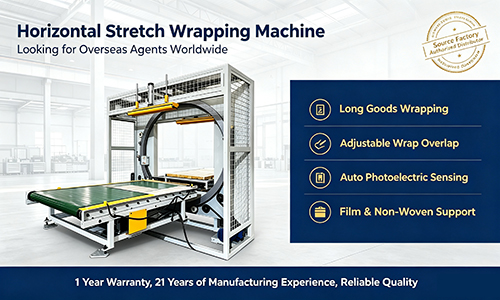
3.Horizontal Stretch Wrapper—Best for Long,Bulky Components
How it works:The load passes through a rotating ring of film while moving on a conveyor,creating a full sleeve of wrap around elongated items.
Best suited for:
Exhaust pipes,drive shafts,and tubular components
Long steel profiles and stamped metal blanks
Automotive glass pallets(windshields,side windows)
Rubber hose and belt rolls
Key specifications to look for:
|
Parameter |
Recommended Range |
|
Ring diameter |
1,200–2,000 mm |
|
Conveyor length |
2,000–6,000 mm(customizable) |
|
Wrapping speed |
10–25 m/min |
|
Load height(opening) |
200–800 mm ring opening |
|
Film overlap control |
Adjustable 10%–80% |
Why it works for automotive:Long,cylindrical,or flat automotive components cannot be effectively wrapped on vertical machines.Horizontal wrappers provide a complete 360°film sleeve that locks elongated parts into a rigid,protected unit—preventing shifting,edge damage,and surface scratches during transport.
Dyehome recommendation:The H1200 horizontal wrapper handles loads up to 6 m long with adjustable ring diameter,specifically engineered for automotive exhaust systems,tubular components,and rolled materials.
Choosing the Right Wrapper by Automotive Segment
OEM Manufacturing(Tier 1→OEM Assembly Plants)
Volume:50–200+pallets/day
Load profile:Heavy,standardized(engine blocks,transmissions,stamped parts)
Priority:Throughput speed,consistency,integration with production line
Recommended:Rotary arm wrapper with conveyor integration and PLC auto-start.OEM lines demand 24/7 uptime,so choose a model with:
Automatic film clamping and cutting
Pre-stretch carriage with servo tension control
Fault diagnostics and remote monitoring capability
Tier Supplier Distribution(To Multiple OEMs&Aftermarket)
Volume:20–80 pallets/day
Load profile:Mixed—engine components,brake assemblies,electrical modules
Priority:Flexibility across different pallet sizes and wrap patterns
Recommended:Turntable wrapper with programmable wrap zones.Tier suppliers ship diverse products,so look for:
Multiple pre-set programs(different wrap patterns for different SKUs)
Variable turntable speed and film tension
Top platen or top sheet dispenser for dust/moisture protection
Aftermarket&Warehouse Distribution
Volume:10–50 pallets/day
Load profile:Highly mixed—small cartons,bulky items,returns
Priority:Ease of use,fast changeover,operator safety
Recommended:Semi-automatic turntable wrapper with simple controls.Aftermarket warehouses benefit from:
One-button wrap cycle start
Adjustable film tension for fragile and heavy loads
Low step-on turntable for easy forklift loading
5 Critical Features to Evaluate Before Purchase
When selecting the best stretch wrapping machine for your automotive parts operation,prioritize these five features:
Powered pre-stretch carriage(minimum 250%)—Reduces film cost by 22–30%per pallet while increasing load stability through higher containment force
Variable film tension control—Essential for switching between heavy steel components and fragile electronic modules on the same machine
Heavy-duty construction(2,000+kg rated)—Automotive pallets routinely exceed standard warehouse weights;the frame and turntable must handle sustained heavy loads without deflection
Programmable wrap patterns—Different automotive parts need different wrap densities;programmable logic eliminates manual reconfiguration and operator error
Safety compliance(CE,ISO 13849)—Automotive plants enforce strict safety standards;your wrapper must include emergency stops,safety fencing interfaces,and light curtain compatibility
Real-World Cost Impact:Machine Wrapping vs.Manual Wrapping in Automotive
|
Metric |
Manual Wrapping |
Machine Wrapping(Auto) |
|
Film per pallet |
1.2 kg(avg.) |
0.55–0.7 kg(250%pre-stretch) |
|
Wrap time per pallet |
5–8 minutes |
45–90 seconds |
|
Labor cost per pallet |
$3.50–5.00 |
$0.30–0.50 |
|
Transit damage rate |
3–5%of shipments |
<1% |
|
Annual film cost(100 pallets/day) |
~$87,600 |
~$48,000 |
|
Payback period |
— |
6–14 months |
Based on industry benchmarks from automated wrapping operations wrapping 100 pallets/day,250 working days/year.
The numbers make the case clear:for any automotive operation wrapping more than 20 pallets per day,an automated stretch wrapper delivers positive ROI within the first year—through film savings alone,before factoring in reduced damage claims and freed labor.
Conclusion:Match Your Machine to Your Automotive Segment
The best stretch wrapping machine for automotive parts is not one universal model—it is the machine that matches your specific supply chain segment,load profile,and throughput requirements.
OEM high-volume lines→Rotary arm wrapper with conveyor integration
Tier 1 supplier mixed flows→Turntable wrapper with programmable patterns
Aftermarket/warehouse operations→Semi-automatic turntable with easy controls
Long/bulky components→Horizontal wrapper for full sleeve protection
FAQ
Q:What is the best stretch wrapping machine for heavy automotive engine blocks?
A:For heavy engine blocks(500–2,000 kg per pallet),a heavy-duty turntable stretch wrapper with a minimum 2,000 kg rated capacity is the best choice.Look for models with powered pre-stretch carriages(250%+)and variable film tension to handle the dense,sharp-edged geometry of cast iron and aluminum engine components.The turntable design provides consistent spiral wrap coverage on uniform,stable pallets typical of OEM engine shipments.
Q:How much film cost can an automotive parts manufacturer save with an automatic stretch wrapper?
A:Automatic stretch wrappers with powered pre-stretch technology(250%–300%)reduce film consumption by 22–30%compared to manual wrapping.For a facility wrapping 100 pallets per day,this translates to approximately$39,000–$40,000 in annual film savings alone.Additional savings come from reduced labor costs(65%+reduction in wrapping labor)and lower transit damage claims.Total payback period is typically 6–14 months.
Q:Can a stretch wrapper handle mixed pallets of different automotive parts?
A:Yes,modern programmable stretch wrappers can handle mixed pallets by allowing operators to select from pre-set wrap programs—each with different film tension,wrap zones,and rotation speeds.For example,a light electronics module pallet uses low tension with more top wraps,while a heavy brake rotor pallet uses high tension with reinforced base wraps.The key is choosing a wrapper with PLC-controlled variable settings rather than a basic single-speed model.
Q:What type of stretch wrapper is best for long automotive exhaust pipes and drive shafts?
A:Horizontal stretch wrappers(also called orbital wrappers)are the best solution for long,cylindrical automotive components.The load passes through a rotating film ring on a conveyor,creating a complete protective sleeve.This prevents shifting,protects against edge damage,and secures items that cannot be effectively wrapped on vertical turntable or rotary arm machines.Horizontal wrappers handle lengths from 1 m to over 6 m.
Q:Is CE certification necessary for stretch wrappers used in automotive plants?
A:While CE certification is a regulatory requirement for machines sold in the European Economic Area,even non-European automotive plants increasingly require CE-compliant equipment as a procurement standard.CE certification signals compliance with machinery safety directives(ISO 13849,IEC 62046)including emergency stop systems,safety interlocks,and risk assessment documentation.Many global OEMs mandate CE compliance regardless of installation location.
products
Horizontal Stretch Wrapping Machine SP1000 for Pipes
view more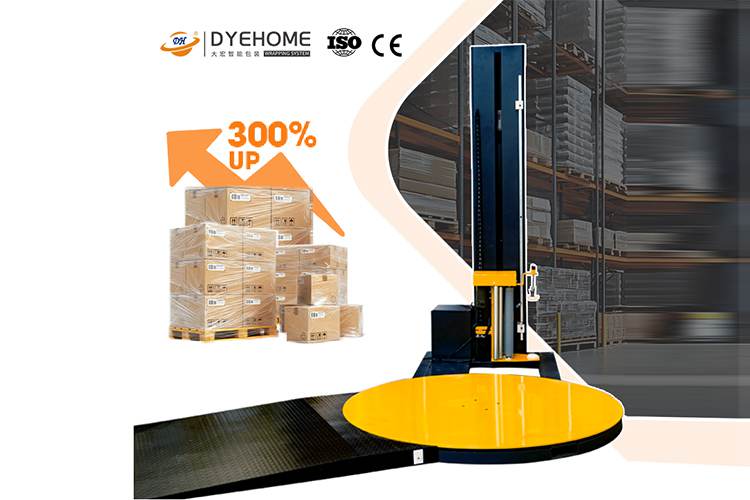
Pallet Stretch Wrapping Machine
view more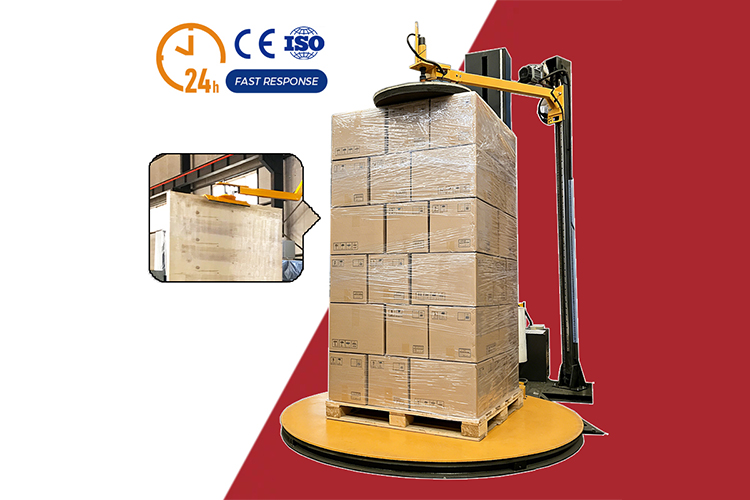
Top Press Pallet Stretch Wrapping Machine
view more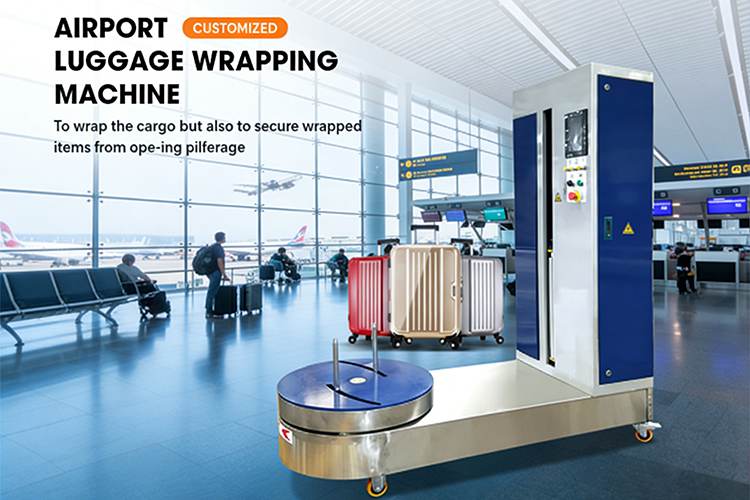
Luggage Wrapping Machine for Airports
view more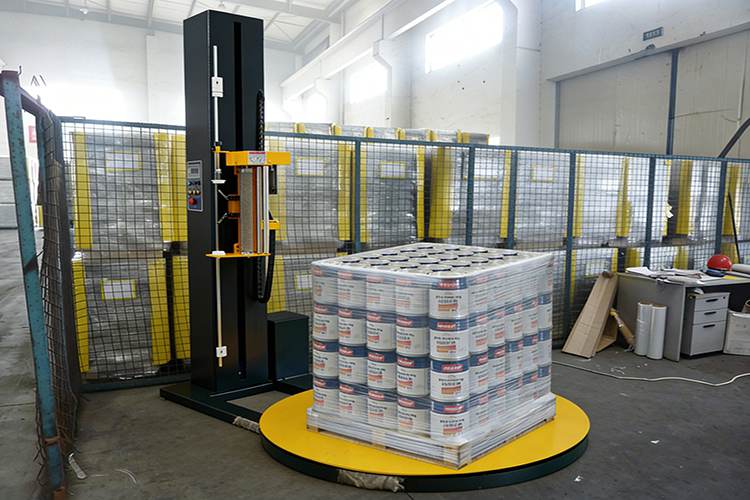
Pallet Stretch Wrapping Machine for Canned Goods
view more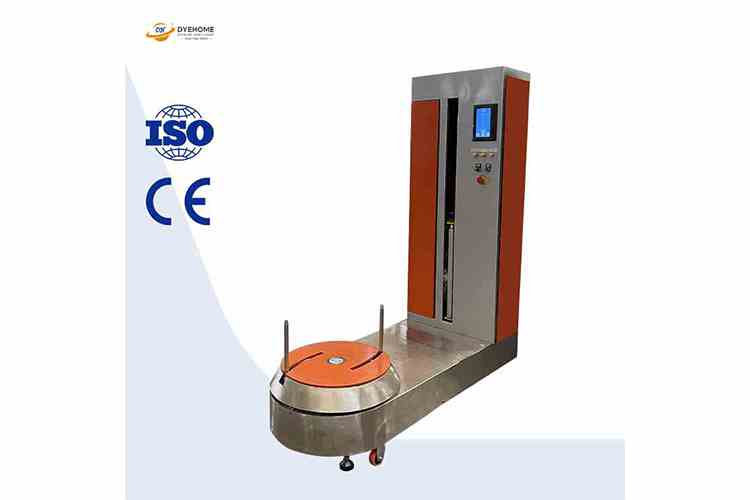
Airport Self-Service Luggage Wrapping Machine
view more
Cantilever wrapping film packaging machine
view more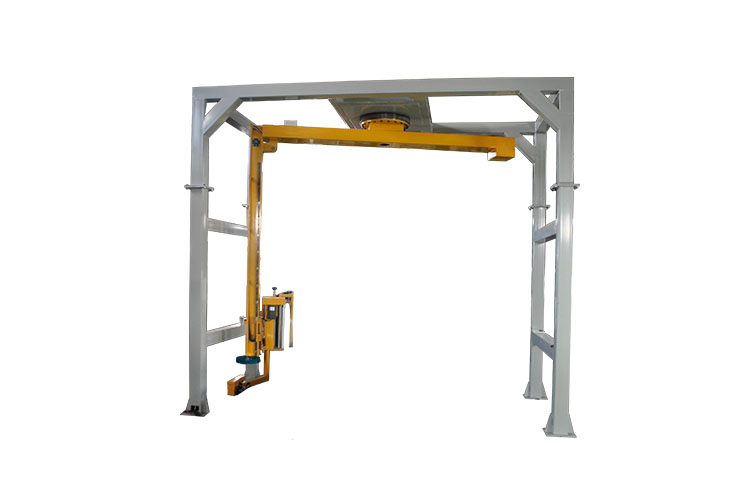
Gantry fully automatic cantilever wrapping machine
view more
 Shandong Dyehome Intelligent Equipment Co.,Ltd
Phone:0086-17362172587
Whatsapp:+8617362172587
Email:machinedyehome@gmail.com
Add:Building 62, 3000 Meili East Road, DmiPark, Wujiapu Street, Huaiyin District, Jinan City,Shandong Province
Jinan Jiasen Packaging Equipment Co., LtdPhone:0086-15665802370
Add:High-end Equipment Manufacturing Industrial Park, East Industrial New Town, Ancheng Town, Pingyin County, Jinan City, Shandong Province
Shandong Golden Pack Intelligent Equipment Co.,LtdPhone:0086-15662690213
Add:High-end Equipment Manufacturing Industrial Park, East Industrial New Town, Ancheng Town, Pingyin County, Jinan City, Shandong Province
YoursIndustry
OurSolutions
OurServices
OurInformation