

Stretch Wrapper for Warehouse:How to Choose the Right Machine for Your Operation
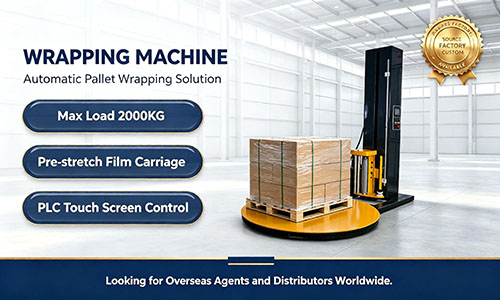
A stretch wrapper for warehouse operations is a packaging machine that wraps stretch film around palletized loads to secure them for storage and transit.In an era where the global stretch wrap market has reached USD 4.68 billion in 2025 and is projected to hit USD 7.49 billion by 2034(Fortune Business Insights,2026),choosing the right warehouse wrapping solution is no longer optional—it's a competitive necessity.
Whether you run a 5,000-square-foot distribution center or a 200,000-square-foot fulfillment hub,the wrong stretch wrapper costs you money every single day:through film waste,labor inefficiency,load damage,or bottlenecked throughput.This guide breaks down exactly which machine type fits which warehouse profile—so you can make a data-backed decision.
Why Warehouses Are Switching from Manual to Machine Wrapping
Manual hand wrapping remains common in small operations,but the economics have shifted dramatically.Here's what the data shows:
Film waste:Hand wrapping consumes 10–30%more stretch film than machine wrapping due to inconsistent tension and overlapping(CSF Pack,2026)
Injury costs:Manual wrapping involves repetitive twisting,bending,and pulling—a leading cause of warehouse musculoskeletal injuries.The average workers'compensation claim for a back injury exceeds$40,000 in direct and indirect costs
Inconsistent load quality:Human-applied wraps vary in tension,layer count,and coverage—increasing the risk of load shift,product damage,and customer returns
Throughput ceiling:A manual operator wraps 15–20 pallets per shift.A semi-automatic turntable handles 30–40 pallets per hour
Key Insight:Even one prevented workplace injury per year can justify the entire machine investment.When you factor in film savings,labor reallocation,and damage reduction,most warehouse stretch wrappers pay for themselves within 4–18 months.
Source:OSHA consistently rates manual material handling as a high-risk activity.Market data from Fortune Business Insights(Report FBI109169,August 2026).
Types of Stretch Wrappers for Warehouse Applications
Not all warehouses have the same needs.Here's a breakdown of the main machine types and where each excels:
1.Turntable Stretch Wrappers
How it works:The pallet sits on a rotating turntable while the film carriage moves up and down on a vertical mast.
|
Feature |
Details |
|
Throughput |
20–40 pallets/hour |
|
Best for |
Small to mid-size warehouses,mixed SKU operations |
|
Footprint |
Compact(approx.2m×2m) |
|
Price range |
$3,000–$15,000 |
|
Max load height |
Typically 1.8–2.2m |
Warehouse fit:Turntable wrappers are the most popular choice for general-purpose warehouses.They handle a wide range of pallet sizes and load configurations,require minimal floor space,and are easy to operate with basic training.Ideal for operations wrapping 10–50 pallets per day.
2.Rotary Arm Stretch Wrappers
How it works:The pallet remains stationary while a rotating arm orbits around it,applying film.
|
Feature |
Details |
|
Throughput |
30–60 pallets/hour |
|
Best for |
Medium to high-volume warehouses,heavy/unstable loads |
|
Footprint |
Moderate(arm sweeps require clearance) |
|
Price range |
$8,000–$25,000 |
|
Max load height |
Up to 2.5m+ |
Warehouse fit:Rotary arm machines excel when you have heavy,unstable,or oversized loads that can't spin on a turntable.Common in building materials,chemical,and beverage warehouses where load integrity is critical.
3.Inline(Conveyor-Integrated)Stretch Wrappers
How it works:Fully integrated into the production or packaging line—pallets enter on a conveyor,the machine wraps automatically,and the wrapped pallet exits downstream.
|
Feature |
Details |
|
Throughput |
20–40+pallets/hour |
|
Best for |
High-volume distribution centers,automated warehouses |
|
Footprint |
Requires dedicated line space |
|
Price range |
$20,000–$60,000+ |
|
Integration |
PLC-controlled,IoT-ready,conveyor sync |
Warehouse fit:For warehouses moving 100+pallets per day with standardized processes,inline systems deliver maximum throughput with minimal labor.These are the backbone of large 3PL(third-party logistics)operations and e-commerce fulfillment centers.
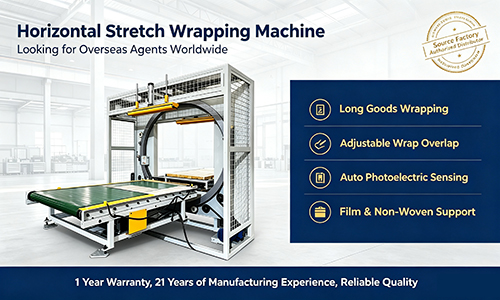
4.Horizontal Stretch Wrappers
How it works:The product passes through a rotating film ring horizontally—used for long,irregular,or non-palletized items.
表格
|
Feature |
Details |
|
Throughput |
Varies by product length and speed |
|
Best for |
Lumber,pipes,textiles,rolled goods |
|
Footprint |
Long but narrow |
|
Price range |
$5,000–$30,000 |
Warehouse fit:Specialty warehouses handling long or non-palletized products(timber,carpet rolls,steel tubes)need horizontal wrappers rather than vertical pallet wrappers.
5 Key Factors to Evaluate Before Buying a Warehouse Stretch Wrapper
Use this decision framework to match machine type to your warehouse requirements:
Factor 1:Daily Pallet Volume
|
Daily Volume |
Recommended Type |
Why |
|
1–15 pallets |
Semi-automatic turntable |
Low cost,simple operation,adequate capacity |
|
15–50 pallets |
Semi-automatic turntable or rotary arm |
Higher throughput model with pre-stretch carriage |
|
50–100 pallets |
Rotary arm or semi-automatic inline |
Faster cycle times,less operator dependency |
|
100+pallets |
Fully automatic inline system |
Maximum throughput,PLC-controlled,conveyor-integrated |
Factor 2:Load Characteristics
Standard pallets(uniform size,stable):Turntable handles these efficiently
Heavy loads(1,500kg+):Rotary arm—load doesn't spin,reducing toppling risk
Unstable or tall loads:Rotary arm with top sheet dispenser for full containment
Long/irregular products:Horizontal wrapper is the only viable option
Mixed load profiles:Turntable with programmable wrap patterns for flexibility
Factor 3:Available Floor Space
Warehouse real estate is expensive.Measure your available footprint before selecting:
Turntable:Needs~2m×2m+operator clearance.Most space-efficient.
Rotary arm:Requires sweep radius clearance around the stationary pallet position
Inline system:Needs dedicated conveyor line length(typically 6–12m total)
Factor 4:Film Cost&Pre-Stretch Capability
Film is your biggest ongoing cost—not the machine itself.Modern pre-stretch carriages can stretch film 250–300%of its original length,meaning one roll covers significantly more pallets.
Quick calculation:
Without pre-stretch:~150m film per pallet(hand wrapping)
With 250%pre-stretch:~50m film per pallet(machine wrapping)
Annual film savings at 20 pallets/day:Approximately$4,000–$8,000/year depending on local film pricing
Always specify machines with powered pre-stretch carriages—the ROI is immediate.
Factor 5:Integration with Warehouse Management Systems(WMS)
For warehouses scaling toward smart logistics,look for machines with:
PLC control systems for consistent,programmable wrap cycles
IoT connectivity for remote monitoring and predictive maintenance
Data output capabilities(wrap count,film usage,cycle time)to feed into WMS or ERP systems
Pro Tip:Machines with smart sensors that auto-detect load height and adjust wrapping parameters reduce operator error by up to 90%and ensure every pallet meets your containment standard.
Stretch Wrapper Applications Across Warehouse Types
Distribution Centers(3PL&E-Commerce Fulfillment)
Pain point:High volume,mixed SKUs,tight delivery windows,and strict customer load quality requirements.
Solution:Semi-automatic or fully automatic inline wrappers with programmable recipes for different customers.A 3PL handling 200+pallets/day typically deploys 2–3 inline machines running in parallel.
Recommended setup:Fully automatic inline turntable or rotary arm with automatic film cut and wipe,integrated with conveyor line and WMS trigger signals.
Building Materials&Chemical Warehouses
Pain point:Heavy,dusty,and sometimes unstable loads.Chemical pallets may require full enclosure for moisture protection during outdoor storage.
Solution:Heavy-duty rotary arm wrappers with reinforced frames,top sheet dispensers,and compatibility with thicker gauge films(23–30 microns).For outdoor storage,machines with top-sheet application create a water-resistant barrier.
Recommended setup:Rotary arm wrapper rated for 2,000kg+loads,with adjustable tension control for different product types(tiles,mortar bags,chemical drums).
Food&Beverage Cold Storage Warehouses
Pain point:Cold environments affect film performance;food safety compliance is non-negotiable;high throughput during seasonal peaks.
Solution:Cold-rated stretch films paired with machines designed for low-temperature operation.Stainless steel or food-grade contact surfaces where required.High-speed pre-stretch carriages to maintain film tension even in sub-zero conditions.
Recommended setup:Semi-automatic turntable for small cold storage(10–30 pallets/day)or rotary arm with cold-compatible film carriage for medium-to-large facilities.
Manufacturing Warehouse&Finished Goods Storage
Pain point:Wrapping is a secondary task—operators need a machine that's fast,reliable,and requires minimal training.
Solution:Semi-automatic turntable with one-touch wrap cycle.Load the pallet,press start,walk away.The machine handles the rest.
Recommended setup:Turntable wrapper with automatic turntable rotation,powered pre-stretch,and adjustable wrap height settings.For operations with diverse product lines,choose models with 10+programmable wrap patterns.
Frequently Asked Questions
Q:What size stretch wrapper do I need for my warehouse?
A:Match the machine to your daily pallet volume.For 1–15 pallets/day,a standard turntable(1,500mm or 1,650mm turntable diameter)is sufficient.For 15–50 pallets/day,choose a high-speed turntable with powered pre-stretch.For 50+pallets/day,consider a rotary arm or inline system.Always measure your largest pallet dimensions and heaviest load weight before ordering.
Q:Can a stretch wrapper handle oversized or non-standard pallets?
A:Yes.For oversized pallets(up to 1,800mm×1,800mm),specify a larger turntable diameter or a rotary arm wrapper.For non-palletized long products(pipes,lumber,textiles),a horizontal stretch wrapper is the appropriate choice.Most manufacturers offer custom turntable sizes and arm configurations.
Q:What's the typical ROI timeline for a warehouse stretch wrapper?
A:Semi-automatic turntable wrappers typically achieve payback in 4–12 months.Fully automatic systems pay back in 8–18 months.The ROI timeline accelerates with higher labor costs,multi-shift operations,high-value products,and significant film consumption.Operations running 2+shifts often see payback in under 6 months.
products
Horizontal Stretch Wrapping Machine SP1000 for Pipes
view more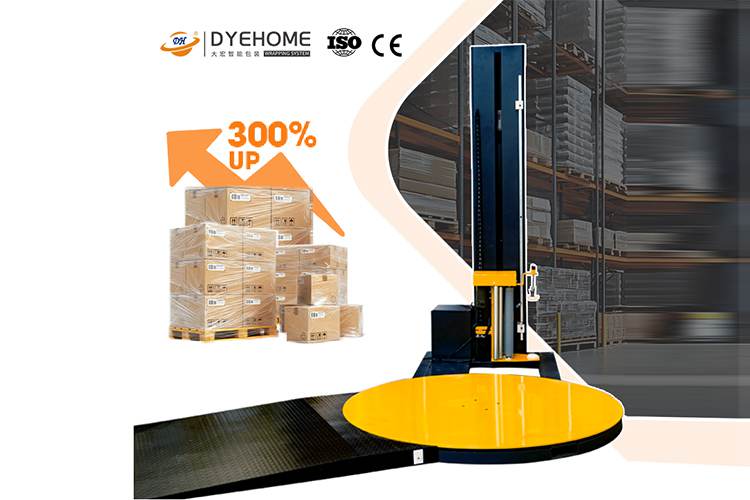
Pallet Stretch Wrapping Machine
view more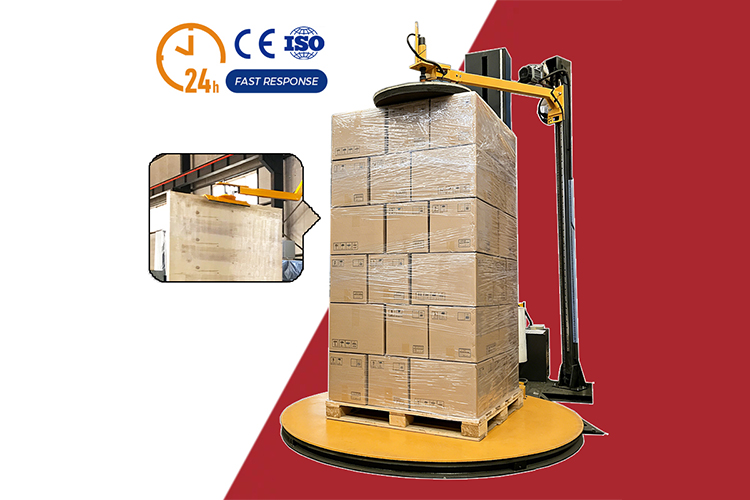
Top Press Pallet Stretch Wrapping Machine
view more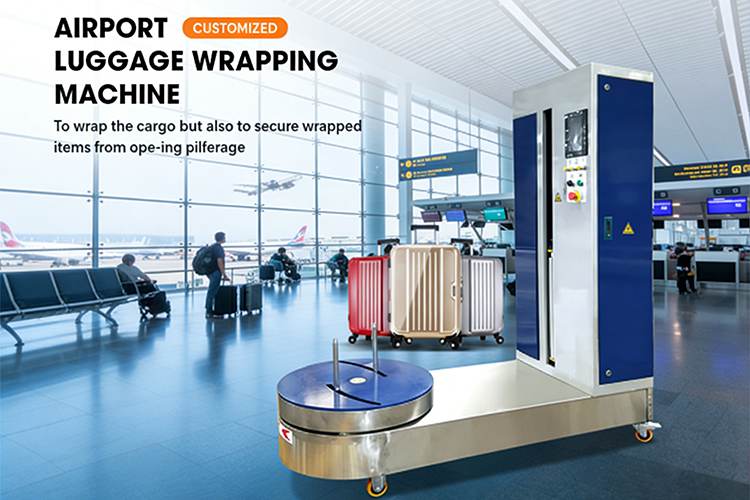
Luggage Wrapping Machine for Airports
view more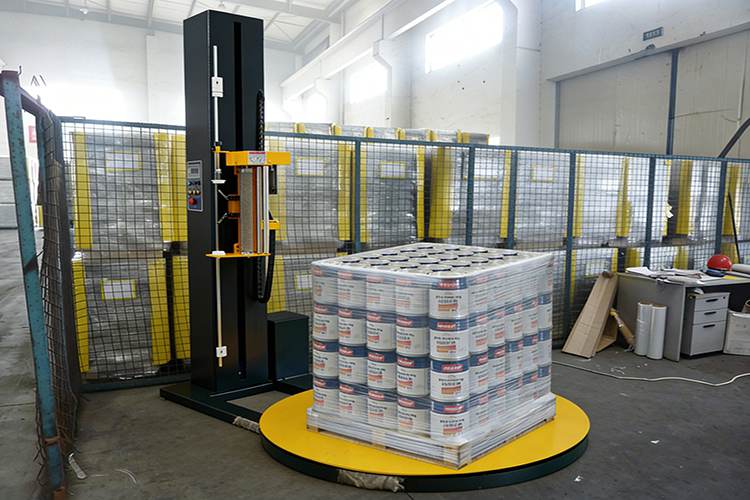
Pallet Stretch Wrapping Machine for Canned Goods
view more
Airport Self-Service Luggage Wrapping Machine
view more
Cantilever wrapping film packaging machine
view more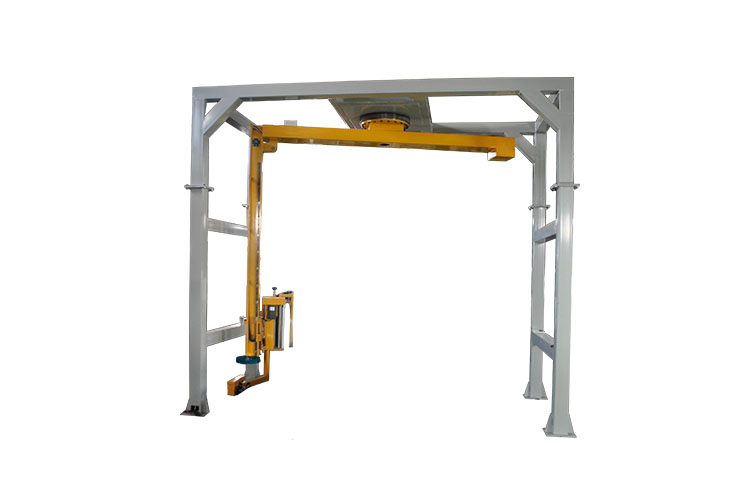
Gantry fully automatic cantilever wrapping machine
view more
 Shandong Dyehome Intelligent Equipment Co.,Ltd
Phone:0086-17362172587
Whatsapp:+8617362172587
Email:machinedyehome@gmail.com
Add:Building 62, 3000 Meili East Road, DmiPark, Wujiapu Street, Huaiyin District, Jinan City,Shandong Province
Jinan Jiasen Packaging Equipment Co., LtdPhone:0086-15665802370
Add:High-end Equipment Manufacturing Industrial Park, East Industrial New Town, Ancheng Town, Pingyin County, Jinan City, Shandong Province
Shandong Golden Pack Intelligent Equipment Co.,LtdPhone:0086-15662690213
Add:High-end Equipment Manufacturing Industrial Park, East Industrial New Town, Ancheng Town, Pingyin County, Jinan City, Shandong Province
YoursIndustry
OurSolutions
OurServices
OurInformation