

Why Do Paper Rolls Often Become Damaged During Transportation? More Paper Mills Are Using Cylindrical Paper Roll Wrapping Machines
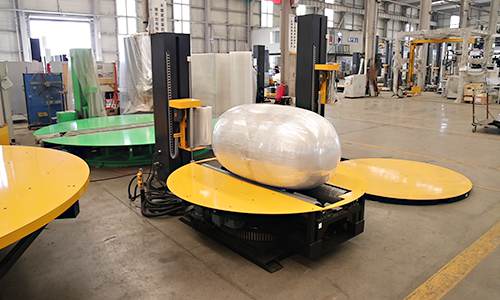
Why Paper Rolls Fear “Edge Damage” During Transportation
For many paper manufacturers today, the biggest concern is no longer production efficiency, but the appearance condition of paper rolls after transportation.
Products such as kraft paper, white cardboard paper, coated paper, and industrial paper rolls are highly vulnerable to edge damage, surface abrasion, and moisture if packaging protection is inadequate.
When customers receive the goods, the first thing they inspect is often not the paper itself, but whether the edges of the rolls remain intact. Once the roll edges are damaged, problems such as web misalignment, paper jams, and feeding issues can occur during production.
Long-distance transportation and export shipping require repeated forklift handling and loading operations. Simple manual film wrapping is often unable to provide sufficient protection for the outer surface of the rolls.
As a result, more paper mills are adopting cylindrical paper roll wrapping machines to achieve complete 360-degree wrapping protection and improve transportation safety.
Why Paper Rolls Still Suffer Edge Wear Even After Being Wrapped
Many factories previously relied on manual wrapping or simple external covering methods, yet paper roll edges still became damaged during transportation.
The reason is simple.
Manual wrapping may cover the surface, but it rarely achieves truly uniform and consistent overall protection.
Because paper rolls are extremely heavy, uneven film tension during transportation can easily cause the outer protection layer to fail.
This becomes especially problematic during:
Frequent forklift transfers, long-term warehouse storage, container transportation, export shipping, and repeated loading and unloading operations.
The edges of the paper rolls are the most vulnerable areas.
Machines such as the HYP2000F-AU cylindrical paper roll wrapping machine use turntable rotation to achieve full 360-degree wrapping, creating a more stable protective structure around the entire roll.
For paper products, the real issue is not whether wrapping film is applied, but whether the roll edges remain intact after transportation.
Why White Paper Rolls and High-End Paper Products Require Better Packaging Standards
Today, premium paper manufacturers have increasingly strict packaging appearance requirements.
This is particularly true for:
White cardboard paper, coated paper, food packaging paper, medical packaging paper, and specialty industrial paper.
These products require high cleanliness and appearance standards. Even minor dust contamination, blackened edges, or surface scratches during transportation can affect customer acceptance.
White paper rolls are especially sensitive because even small stains become highly visible upon delivery.
In the past, many companies viewed packaging simply as a way to prevent roll loosening. Today, more customers are asking:
“Will the packaging affect product appearance?”
As a result, more paper mills are investing in automatic cylindrical wrapping equipment to reduce uneven manual wrapping and improve packaging standardization.
Why More Roll Material Industries Are Focusing on “Overall Wrapping”
In addition to paper manufacturing, many roll material industries are placing greater importance on overall packaging protection.
Examples include:
Nonwoven fabrics, cord fabrics, wire coils, rubber products, and industrial roll materials.
These products share one common issue:
The larger the roll, the more vulnerable it becomes to loosening during transportation.
Without sufficient external protection, long-distance transportation can easily lead to edge deformation and surface contamination caused by impacts and friction.
That is why many roll material manufacturers are adopting automatic cylindrical wrapping systems to improve packaging uniformity through rotational wrapping technology.
Compared with manual wrapping, automated packaging delivers a cleaner appearance and is better suited for continuous large-volume shipments.
Why More Factories Are Reducing Manual Roll Wrapping
In the past, many factories depended heavily on manual wrapping. However, as roll sizes continue to increase, manual packaging problems have become more obvious.
First, packaging consistency varies greatly because different workers apply different wrapping tension levels.
Second, manual packaging efficiency can no longer keep up with modern shipping volumes. Large roll materials are heavy, labor-intensive, and difficult to wrap consistently by hand.
As a result, more paper mills and roll material manufacturers are introducing automatic cylindrical paper roll wrapping machines to improve packaging stability and transportation protection through automated turntable wrapping structures.
For large roll product manufacturers, packaging today is no longer simply about “wrapping the product,” but about ensuring the product still arrives in perfect condition after transportation.
products
-
Pallet Stretch Wrapping Machine
view more -
Top Press Pallet Stretch Wrapping Machine
view more -
Luggage Wrapping Machine for Airports
view more -
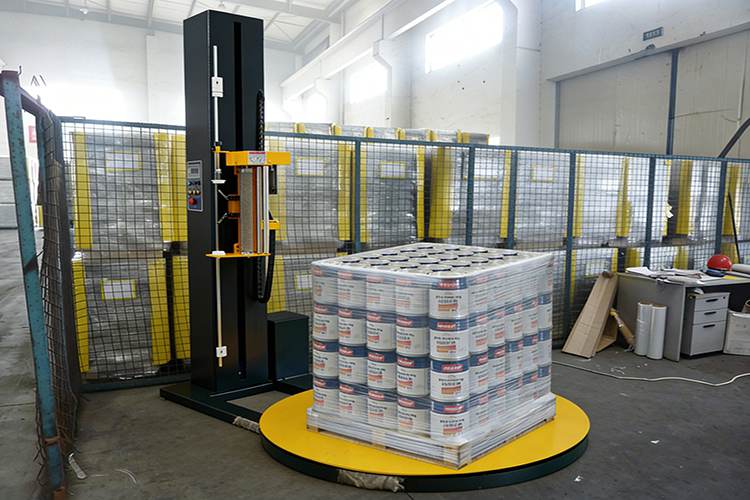
Pallet Stretch Wrapping Machine for Canned Goods
view more -
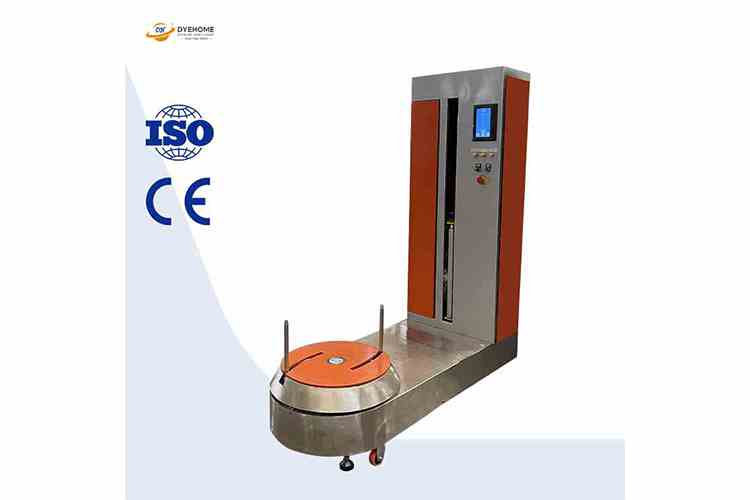
Airport Self-Service Luggage Wrapping Machine
view more -
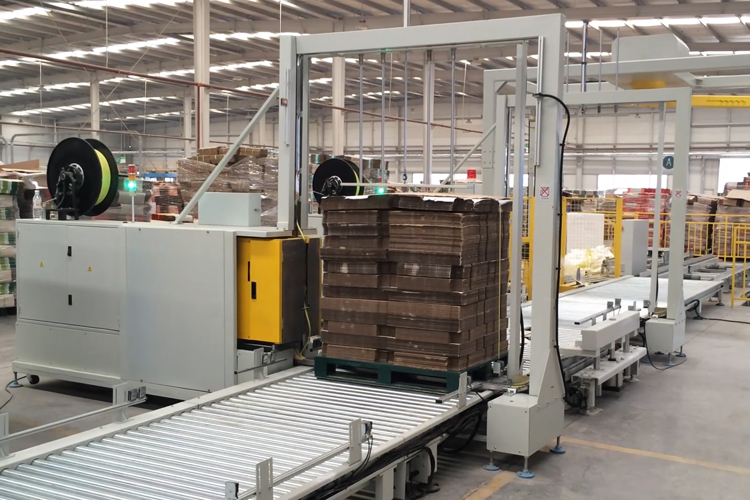
Automated film wrapping and packaging equipment
view more -
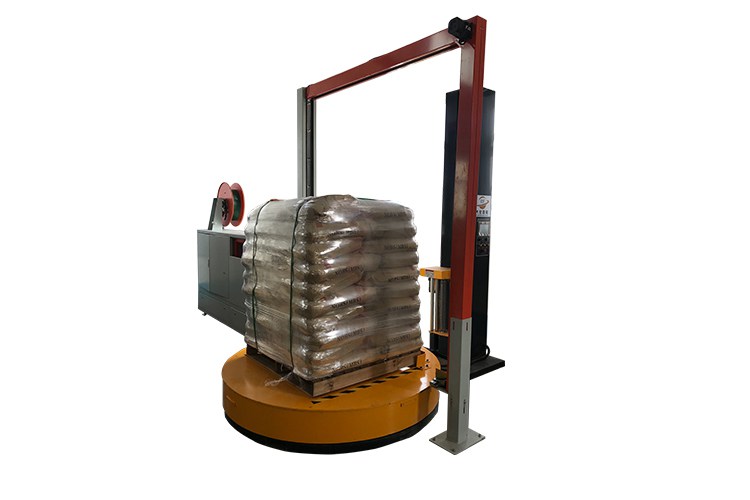
Sword-piercing baler and wrapping machine
view more -
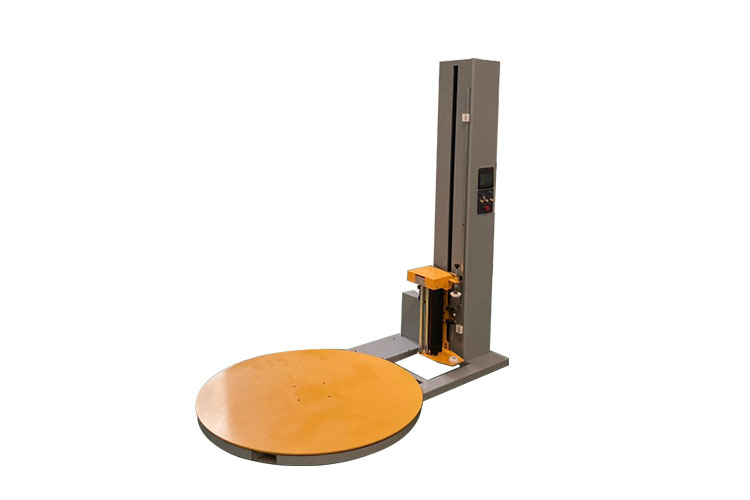
Pallet packaging equipment
view more
-
 Shandong Dyehome Intelligent Equipment Co.,Ltd
Phone:0086-17362172587
Whatsapp:+8617362172587
Email:machinedyehome@gmail.com
Add:Building 62, 3000 Meili East Road, DmiPark, Wujiapu Street, Huaiyin District, Jinan City,Shandong Province
Jinan Jiasen Packaging Equipment Co., LtdPhone:0086-15665802370
Add:High-end Equipment Manufacturing Industrial Park, East Industrial New Town, Ancheng Town, Pingyin County, Jinan City, Shandong Province
Shandong Golden Pack Intelligent Equipment Co.,LtdPhone:0086-15662690213
Add:High-end Equipment Manufacturing Industrial Park, East Industrial New Town, Ancheng Town, Pingyin County, Jinan City, Shandong Province
-
YoursIndustry
-
OurSolutions
-
OurServices
-
OurInformation