

Why Are More and More Factories Adding Online Automatic Wrapping Machines? Traditional Manual Packaging Can No Longer Keep Up with Shipping Demands
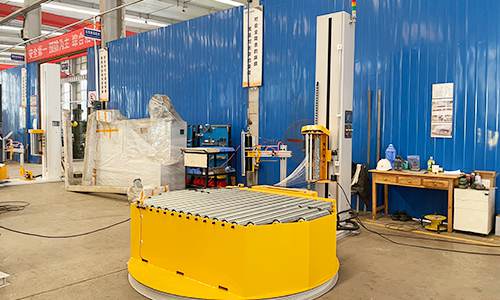
Why Packaging Stations Are Becoming Production Bottlenecks in Many Factories
Today, many food, beverage, chemical, and logistics warehousing companies are facing a common problem at the back end of their production lines. While front-end production speeds continue to increase, the packaging section often becomes the bottleneck. During shipment peaks, pallets quickly accumulate, and if the packaging speed cannot keep up, the entire conveyor system may be forced to slow down or even stop.
Many factories previously used forklifts for pallet handling combined with standard turntable wrapping machines. However, as factory automation becomes more common, the limitations of this method are becoming increasingly obvious. Manual pallet transportation creates unstable operating rhythms, long waiting times during busy periods, and packaging speeds that are difficult to synchronize with automated production lines.
Continuous production industries such as beverages, food processing, and daily chemical manufacturing often rely on high-speed production systems. If the packaging station cannot operate continuously, overall shipping efficiency will inevitably be affected.
As a result, more factories are introducing online automatic wrapping machines to connect directly with conveyor systems, enabling automatic pallet transfer, automatic sensing, and continuous wrapping operations to improve shipment continuity.
Why Traditional Standalone Wrapping Machines No Longer Meet Modern Automation Needs
In the past, companies mainly focused on whether a single wrapping machine could complete the packaging task. Today, however, manufacturers increasingly realize that true efficiency depends on whether the packaging system can integrate seamlessly into the entire automated logistics line.
With the growing popularity of smart factories and unmanned workshops, the weaknesses of standalone equipment become even more noticeable. Frequent forklift handling not only increases waiting time but also creates pallet positioning deviations. Semi-automatic machines are also difficult to synchronize with upstream and downstream conveyor systems.
In contrast, online automatic wrapping machines can be customized according to site requirements, including roller conveyors, chain conveyors, and slat conveyor systems. Products can automatically enter the wrapping area, complete wrapping operations, and finish automatic film clamping and cutting without manual intervention.
For many automated factories today, the key concern is no longer simply “whether the product is wrapped,” but whether the packaging system can operate continuously and reliably.
Why More Companies Are Focusing on Unmanned Packaging
Many large factories are now facing pressure not only from labor costs but also from labor instability.
Packaging positions often involve repetitive work and heavy labor intensity. During shipment peaks, workers are required to handle pallets continuously, leading to recruitment difficulties, high employee turnover, and unstable packaging efficiency.
Therefore, more companies are investing in unmanned packaging workshops to reduce manual intervention and improve packaging consistency.
Online automatic wrapping machines such as the HTP1800FZ-PL can automatically complete pallet detection, conveying, wrapping, film clamping, and film cutting operations. For continuous shipment environments, these machines are better suited for long-term stable operation. Automatic film clamping and cutting mechanisms also reduce manual assistance and improve overall packaging efficiency.
For logistics warehouses, e-commerce facilities, and large manufacturing plants, the goal is no longer simply “whether workers can complete the task,” but whether the equipment can operate continuously for 24 hours.
Why High-Volume Industries Are More Suitable for Online Automatic Wrapping Machines
Industries increasingly adopting online automatic wrapping machines mainly include food, beverage, chemical, building materials, and logistics warehousing sectors. These industries share common characteristics: large pallet shipment volumes and continuous shipping schedules.
For example, beverage production lines typically operate at very high speeds. If the packaging section cannot match the line speed, products quickly accumulate on conveyors. Logistics warehouses, on the other hand, focus heavily on improving shipment efficiency and minimizing manual waiting time.
As more companies build automated high-bay warehouses, pallet loads often need to move directly into storage systems. This makes packaging stability and system integration increasingly important.
As a result, online automatic wrapping machines are gradually evolving from traditional packaging equipment into essential components of modern factory automation and logistics systems.
Why More Factories Are Replanning Their Packaging Processes
In the past, many companies viewed packaging as simply the final step of production and believed that as long as products were wrapped, the job was complete. However, with increasing logistics requirements, packaging now directly affects warehouse efficiency, transportation stability, and customer receiving experiences.
For high-frequency shipping operations, unstable packaging can cause conveyor congestion and lead to loose pallets or cargo shifting during transportation.
Therefore, more factories are now planning online automatic wrapping machines as part of their production line upgrades. Through automatic conveying, automatic film wrapping, and unmanned packaging systems, companies can improve shipment efficiency and transportation stability simultaneously.
products
-
Pallet Stretch Wrapping Machine
view more -
Top Press Pallet Stretch Wrapping Machine
view more -
Luggage Wrapping Machine for Airports
view more -
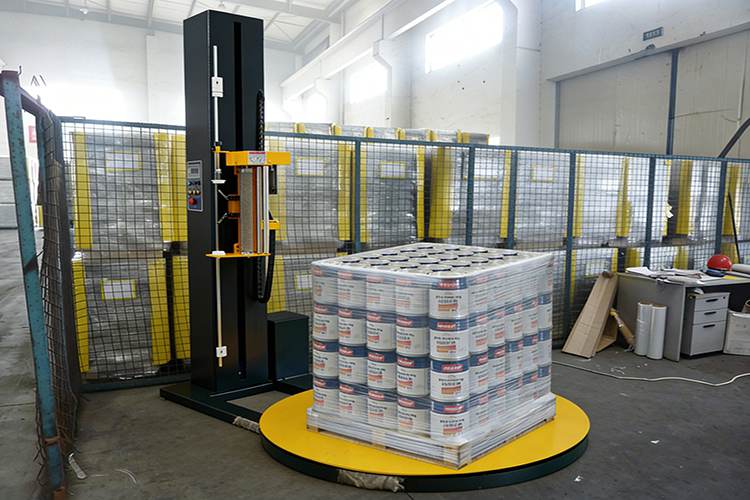
Pallet Stretch Wrapping Machine for Canned Goods
view more -
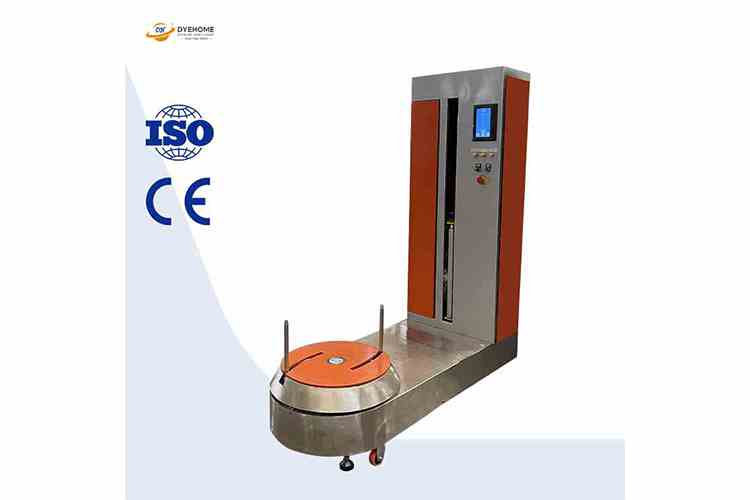
Airport Self-Service Luggage Wrapping Machine
view more -
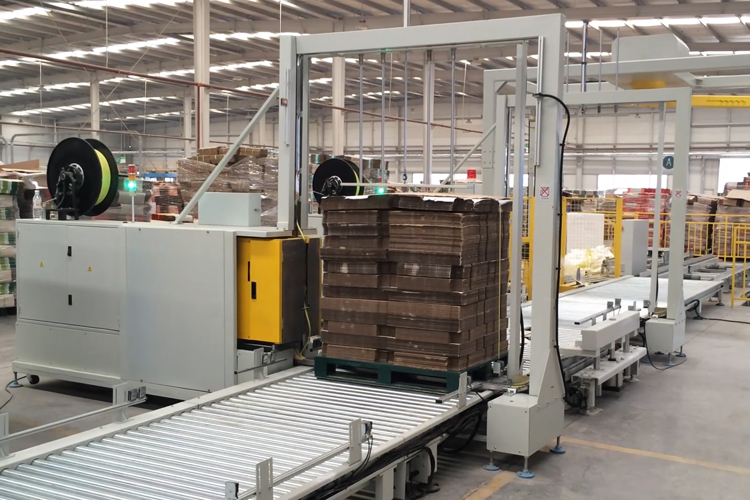
Automated film wrapping and packaging equipment
view more -
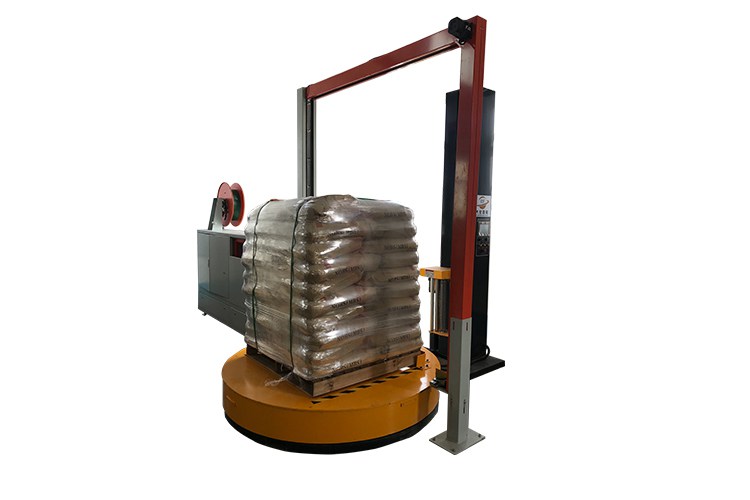
Sword-piercing baler and wrapping machine
view more -
Pallet packaging equipment
view more
-
 Shandong Dyehome Intelligent Equipment Co.,Ltd
Phone:0086-17362172587
Whatsapp:+8617362172587
Email:machinedyehome@gmail.com
Add:Building 62, 3000 Meili East Road, DmiPark, Wujiapu Street, Huaiyin District, Jinan City,Shandong Province
Jinan Jiasen Packaging Equipment Co., LtdPhone:0086-15665802370
Add:High-end Equipment Manufacturing Industrial Park, East Industrial New Town, Ancheng Town, Pingyin County, Jinan City, Shandong Province
Shandong Golden Pack Intelligent Equipment Co.,LtdPhone:0086-15662690213
Add:High-end Equipment Manufacturing Industrial Park, East Industrial New Town, Ancheng Town, Pingyin County, Jinan City, Shandong Province
-
YoursIndustry
-
OurSolutions
-
OurServices
-
OurInformation