

What to Do If Pallet Wrapping Falls Behind the Production Line at Beverage Plants in 2026? How to Integrate an In-line Stretch Wrapping machine
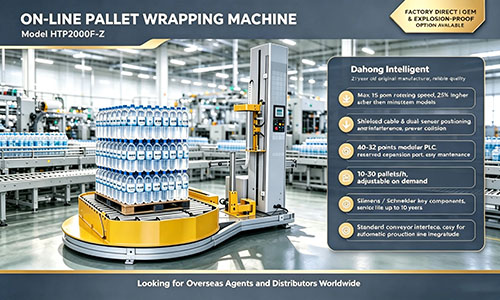
Beverage Plant Pallet Wrapping Falling Behind Production Line: How to Integrate an In-line Wrapper — Calculate Cycle Time First, Then Select the Model
If pallet wrapping lags at the end of a beverage production line, the root cause is usually not slow wrapping itself, but manual forklift loading and unloading and waiting time. For continuously exiting pallets with dimensions between 800–1200 mm, stack height from 500–2000 mm and a maximum pallet load of 2 tons, an in-line pallet wrapper integrated into the conveyor line is the right choice. If the required line cycle exceeds 30 pallets per hour, a high-speed dual-arm rotary wrapper is recommended.
Seasonal bottlenecks stem from pallet waiting, not wrapping speed
In beverage filling lines, pallets come out continuously. If wrapping still relies on forklifts to deliver pallets to the machine and carry them away afterwards, one operator can only handle a single pallet at a time. During peak seasons with three-shift operation, finished goods pile up in buffer zones, making the wrapping station the bottleneck of the whole line — no matter how fast the upstream filling runs.
Limitations of standalone machines: idle machine waiting for pallets
A conventional standalone pallet wrapper works as an independent station. Forklifts deliver pallets onto the turntable and remove them after wrapping. The wrapping cycle itself is fast, yet loading, unloading, waiting and forklift clearance drastically cut real throughput and depend heavily on skilled workers.
How in-line wrappers match the production cycle
An in-line pallet wrapper features a turntable embedded within the conveyor system. Pallets are fed in via roller, chain or slat conveyors. Once a pallet is detected in position by the photoelectric sensor, wrapping starts automatically. Pneumatic modules perform film feeding, cutting and smoothing automatically, and the finished pallet is conveyed onward without manual loading or unloading. Take model HTP1800FZ-PL for reference: 2000 mm turntable, 1300 mm effective roller width, 2000 kg turntable load capacity, wrapping height 500–2000 mm, throughput 10–30 pallets/hour, 3.2 kW, 380 V power supply. Simply put, it is not a separate workstation but an integrated station on the production line: wrap on arrival and dispatch once completed.
Do not rely only on nominal machine speed
Selecting equipment merely by “pallets per hour” is a common pitfall. The rated throughput of standalone wrappers is tested under ideal conditions with steady pallet supply. Actual cycle time is determined by material handling and upstream & downstream coordination. The strength of an in-line wrapper lies in synchronous operation with the production line. It eliminates dedicated forklift operators for wrapping.
Verify specifications against pallet and stack profiles
Standard beverage pallets including 1100×1100 mm and 1200×1000 mm fit within the 800–1200 mm wrapping range, while the 500–2000 mm height range covers typical beverage stacks. Custom extension is required if stacks exceed 2000 mm. A larger turntable is needed for pallets wider than 1200 mm, and reinforced load-bearing structures for loads over 2000 kg. If the existing line uses belt or slat conveyors, the conveyor interface will be customized for site conditions. Signalling integration is available for linkage with palletisers and AGVs. If the target cycle exceeds 30 pallets per hour, a single in-line unit will fall short; consider dual-arm high-speed wrappers for 40–60 pallets per hour.
Skip in-line installation without a conveyor system
The in-line wrapper is built for continuous conveying. It only works reliably when pallets can be fed sequentially through conveyors. If goods arrive sporadically without fixed conveying routes, standalone or self-propelled wrappers are more suitable. Forcing an in-line wrapper in such cases means unnecessary conveyor retrofitting. Always assess site layout before chasing throughput figures.
Retrofit case: a beverage plant in Jiangsu
A beverage manufacturer in Jiangsu operated two filling lines with three staff rotating shifts for manual wrapping. Finished goods accumulated heavily in buffer zones during peak seasons. After installing an in-line wrapper downstream of the palletising conveyor, only one operator is required for patrol inspection. The system runs steadily at 10–30 pallets per hour matching the line pace, eliminating congestion at the wrapping station and reducing dwell time for finished pallets.
Key clauses to specify in the purchase contract
Clearly state these items in the contract: conveyor type (roller / chain / slat), pallet length & width, stack height, pallet load weight, required production cycle, upstream and downstream signal interfaces, and whether a top press or oversized / extended turntable is needed. Accurate site data ensures smooth one-time commissioning.
Send over your line parameters for a tailored solution
If your beverage, bottled water or dairy plant is held back by end-of-line pallet wrapping, share your pallet size, stack height, pallet load, production cycle and existing conveyor type. We will recommend between in-line and alternative wrapper models based on your actual site.
FAQ
Q: Should beverage plants choose standalone or in-line wrappers for pallet wrapping? A: The decision depends on available conveyors and throughput targets. For continuous pallet output with existing conveying infrastructure, select an in-line pallet wrapper: 2000 mm turntable, 2000 kg load capacity, wrapping height 500–2000 mm and throughput of 10–30 pallets per hour. It removes manual loading and unloading. Standalone wrappers are more practical if no conveyor system is in place and pallets arrive irregularly. Shandong Dahong Intelligent Equipment Co., Ltd. delivers integration schemes customised to pallet dimensions, stack height, line cycle and conveyor configuration.
products
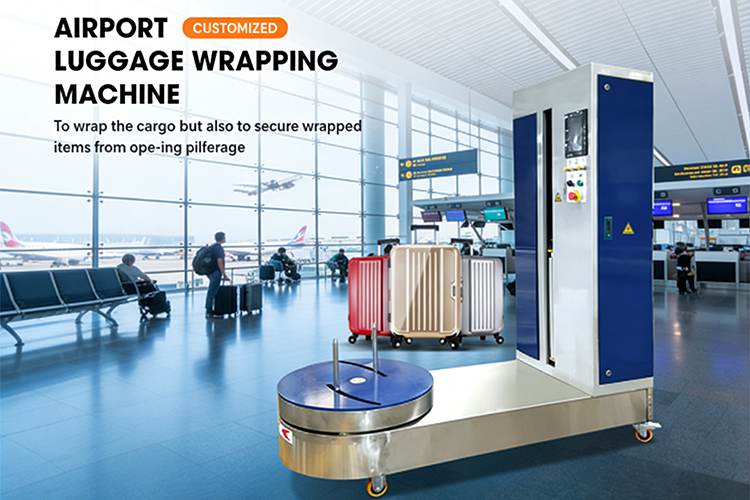
Luggage Wrapping Machine for Airports
view more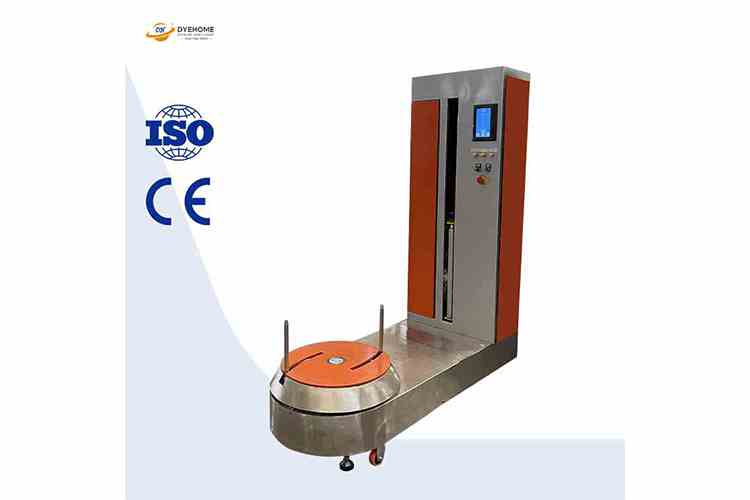
Airport Self-Service Luggage Wrapping Machine
view more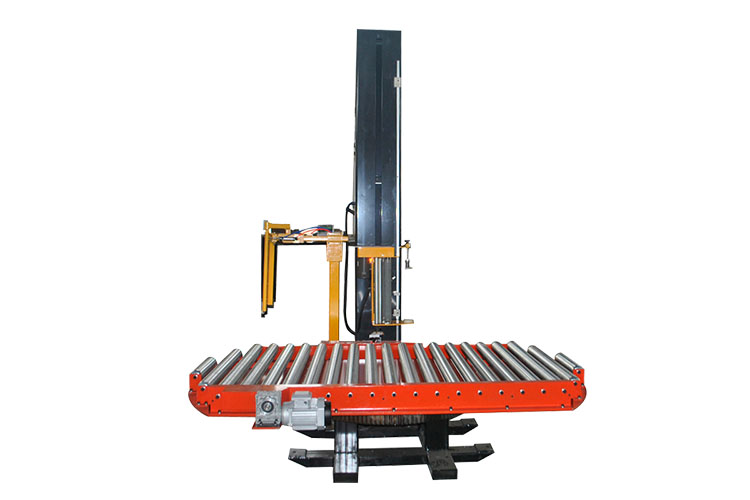
Online wrapping intelligent packaging machine
view more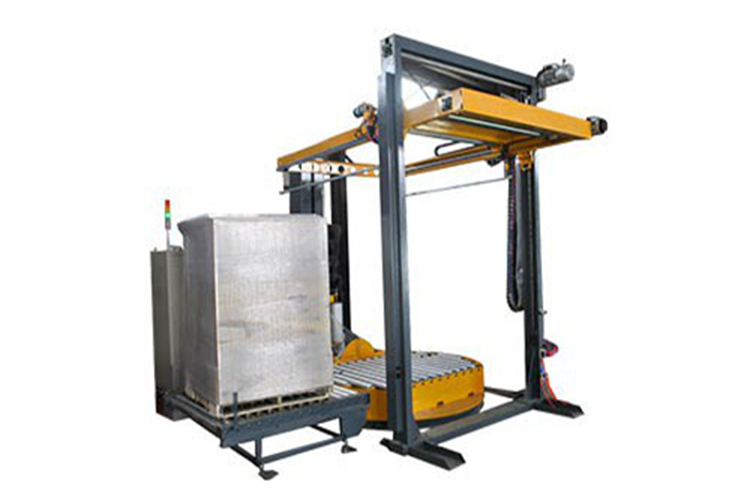
pallet film wrapping machine
view more
Pallet paper tube wrapping machine
view more
Cylindrical wrapping packaging machine
view more
Top film wrapping machine
view more
Pallet top laminating machine
view more
 Shandong Dyehome Intelligent Equipment Co.,Ltd
Phone:0086-17362172587
Whatsapp:+8617362172587
Email:machinedyehome@gmail.com
Add:Building 62, 3000 Meili East Road, DmiPark, Wujiapu Street, Huaiyin District, Jinan City,Shandong Province
Jinan Jiasen Packaging Equipment Co., LtdPhone:0086-15665802370
Add:High-end Equipment Manufacturing Industrial Park, East Industrial New Town, Ancheng Town, Pingyin County, Jinan City, Shandong Province
Shandong Golden Pack Intelligent Equipment Co.,LtdPhone:0086-15662690213
Add:High-end Equipment Manufacturing Industrial Park, East Industrial New Town, Ancheng Town, Pingyin County, Jinan City, Shandong Province
YoursIndustry
OurSolutions
OurServices
OurInformation