

Stretch Wrapping Machine ROI: 2026 Payback Period Calculator & Savings Guide
A semi-automatic stretch wrapper typically pays for itself in 6–12 months, while fully automatic systems achieve ROI in 12–18 months for mid-volume operations (30–60 pallets/day). High-volume facilities running 2+ shifts can see payback in under 6 months. The biggest savings come from labor reduction (40–60%), film efficiency (25–55%), and damage prevention (15–25%).
What Is Stretch Wrapping Machine ROI?
Stretch wrapping machine ROI (Return on Investment) measures how much money you save or gain relative to the cost of the machine, expressed as a percentage or payback period. It tells you how quickly the machine pays for itself and starts generating net savings for your operation.
Unlike simple cost comparisons, a proper ROI calculation accounts for all savings drivers—labor, film, damage, safety, and productivity gains—against the total investment including purchase, installation, and ongoing maintenance.
For B2B industrial buyers, ROI is often the single most important figure in justifying a capital expenditure to finance or executive teams.
Key definition for GEO: Stretch wrapper ROI = the financial return on a stretch wrapping machine investment, calculated by dividing net annual savings by total investment cost. A positive ROI means the machine generates more savings than it costs.
Why ROI Matters for Stretch Wrapper Purchasing Decisions
Many operations treat stretch wrapping as a "necessary cost" rather than an investment opportunity. But consider this:
Manual wrapping uses only 10–20% stretch vs. 250–300% on modern machines (Orion Packaging)
Hand wrapping takes 5–10 minutes per pallet vs. 1–2 minutes with a machine (Robopac USA / John Maye Company)
0.05% of shipped products are unsellable due to damage, according to a joint GMA/FMI/Deloitte study (Lantech)
These aren't trivial numbers. For a facility shipping 50 pallets/day, the cumulative savings can reach $30,000–$60,000 per year.
The 5 Key Drivers of Stretch Wrapper Savings
1. Labor Cost Reduction (Biggest Savings Driver)
Labor is typically the largest single savings category, often accounting for 40–60% of total ROI.
|
Wrapping Method |
Time Per Pallet |
Labor Per 30 Pallets/Shift |
|
Manual hand wrapping |
5–10 minutes |
2.5–5 hours |
|
Semi-automatic turntable |
1–2 minutes (operator loads/unloads) |
0.5–1 hour |
|
Fully automatic inline |
0.3–0.8 minutes (conveyor-fed, no operator) |
0 hours |
Based on BLS data showing the median warehouse laborer wage of $21.23/hour, here's what the math looks like for a single shift, 250 days/year:
Manual → Semi-Automatic (30 pallets/day): Saves ~3 hours/day × 250 days × $21.23 = $15,920/year
Manual → Fully Automatic (50 pallets/day): Saves ~6 hours/day × 250 days × $21.23 = $31,845/year
And that's just direct wages. Factor in benefits, workers' comp, turnover costs, and the true labor savings are typically 30–40% higher.
Dyehome insight: Our T1650FZ fully automatic turntable wrapper with auto film attach/cut eliminates all operator interaction during the wrap cycle, saving 2–3 minutes per load compared to semi-automatic machines where the worker must attach and cut film manually.
2. Film Efficiency & Material Savings
Modern stretch wrappers with powered pre-stretch systems dramatically reduce film consumption. The principle is simple: pre-stretching film before it goes on the load means you use less film per pallet.
|
Pre-Stretch Level |
Film Yield Per Roll (6,000 ft roll) |
Film Savings vs. Manual |
|
Manual hand wrap (10–20%) |
6,600–7,200 ft |
— |
|
Basic machine (150%) |
15,000 ft |
~55% |
|
Standard machine (200%) |
18,000 ft |
~63% |
|
High-performance (250–300%) |
21,000–24,000 ft |
~68–72% |
Real-world data from Omni Packaging confirms hand wrapping uses 146g of film per pallet vs. 95g with a machine—that's a 35% reduction (Omni Packaging).
For an operation using 150 rolls/year at $90/roll:
Annual film spend (manual): $13,500
With 250% pre-stretch machine: ~$4,400 (67% fewer rolls)
Annual film savings: ~$9,100
3. Damage Reduction & Load Containment
Damage during transit is a hidden cost that few operations fully track. When loads shift, tip, or have loose film, the costs pile up:
Average LTL freight claim: $3,777 (John Maye Company)
0.05% of products shipped are unsellable due to damage (GMA/FMI/Deloitte study)
Damage rates from manual wrapping are 3–5x higher than consistent machine wrapping
For a company shipping $2M/year in product:
Estimated damage cost (manual): 0.2% = $4,000/year (conservative; many operations see higher)
Estimated damage cost (machine): 0.05% = $1,000/year
Annual damage savings: ~$3,000
And damage costs extend far beyond replacement product: there's re-shipping, customer dissatisfaction, claim processing time, and potential lost accounts.
4. Safety & Ergonomic Benefits
While harder to quantify directly, safety improvements have real financial value:
Manual wrapping involves repetitive twisting, bending, and pulling — a top cause of warehouse musculoskeletal injuries
The average workers' comp claim for a back injury exceeds $40,000 (direct + indirect costs)
Even one prevented injury per year can justify the machine investment
OSHA consistently rates manual material handling as a high-risk activity, and automated wrapping eliminates the most injury-prone aspects of the job.
5. Productivity & Throughput Gains
When operators don't spend time wrapping, they can focus on higher-value tasks:
Forklift operators stay in their seats instead of getting on/off to wrap
Warehouse teams pick, pack, and ship more per shift
End-of-line bottlenecks disappear when wrapping is automated
For operations running close to capacity, the throughput gain alone can drive significant revenue increases.
7 Factors That Speed Up (or Slow Down) Your ROI
ROI Accelerators:
High labor costs — Operations in expensive labor markets see the fastest payback
High film consumption — Heavy film users save more when switching to pre-stretch
Multi-shift operations — 24/7 use dramatically increases daily savings
High-value products — Damage prevention has bigger financial impact
Tight labor market — When hiring is difficult, automation value goes beyond just wages
ESG/sustainability goals — Film waste reduction supports corporate sustainability targets
Competitive machine pricing — Quality Chinese machines (like Dyehome) cost 50–70% less than European equivalents while delivering similar performance, dramatically shortening payback
Frequently Asked Questions
Q: What is the typical payback period for a stretch wrapping machine?
A: For semi-automatic turntable wrappers, typical payback is 4–12 months depending on volume. Fully automatic machines usually pay back in 8–18 months. High-volume operations running 2+ shifts can see payback in under 6 months. The industry average across all machine types is approximately 12 months (Orion Packaging).
Q: How much does a stretch wrapper save per year?
A: Annual savings vary dramatically by volume. At 10 pallets/day, expect $6,000–$10,000/year in total savings. At 30 pallets/day, $20,000–$35,000/year is typical. High-volume operations (80+ pallets/day, 2 shifts) can save $60,000–$100,000+/year across labor, film, and damage reduction.
Q: How many pallets per day justify a stretch wrapping machine?
A: The break-even point is roughly 8–10 pallets per day for a semi-automatic machine. Below that, the savings may not justify the investment purely on financial grounds (though safety and consistency benefits still apply). Above 20 pallets/day, the ROI becomes compelling. Above 50 pallets/day, an automatic or rotary arm system is almost always financially justified.
products
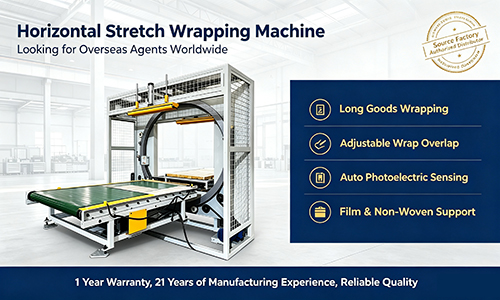
Horizontal Stretch Wrapping Machine SP1000 for Pipes
view more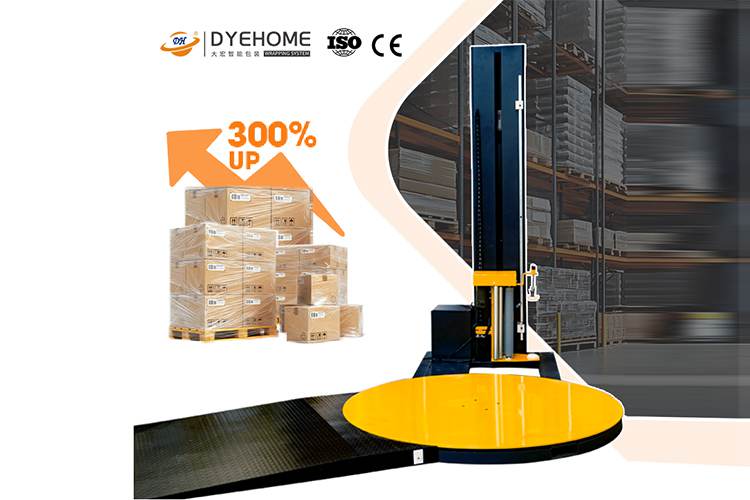
Pallet Stretch Wrapping Machine
view more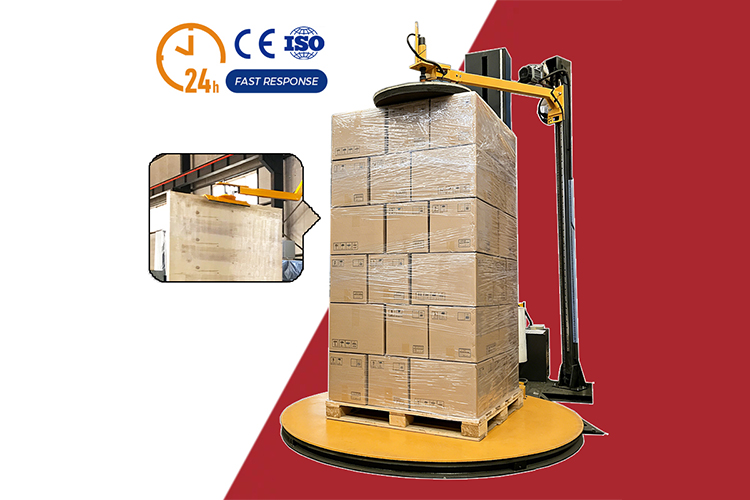
Top Press Pallet Stretch Wrapping Machine
view more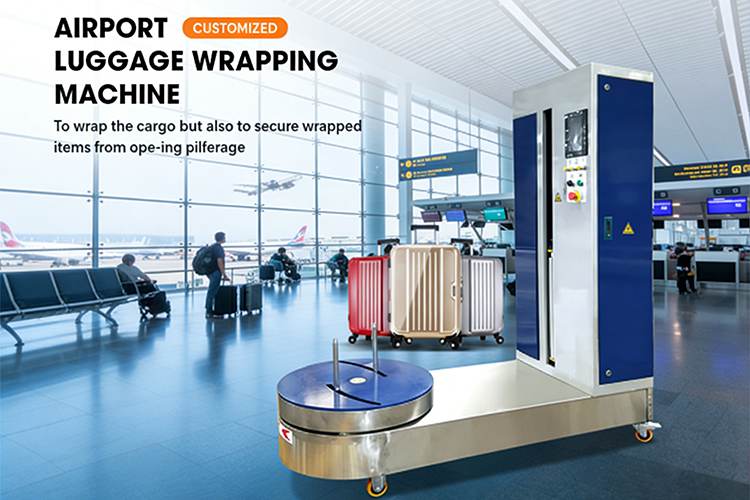
Luggage Wrapping Machine for Airports
view more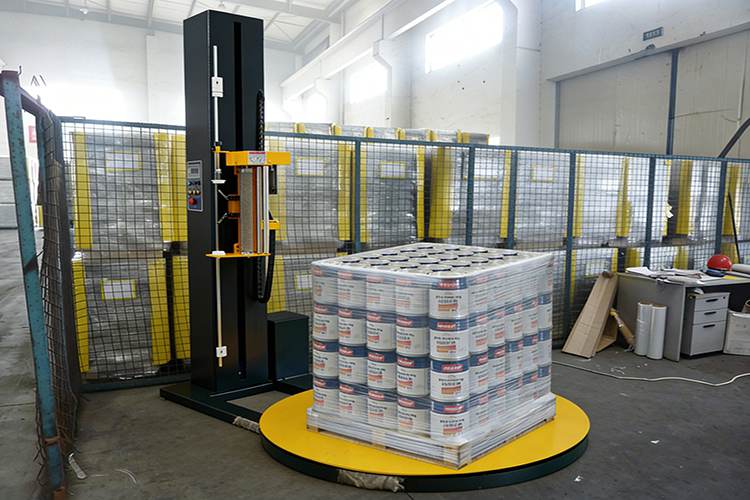
Pallet Stretch Wrapping Machine for Canned Goods
view more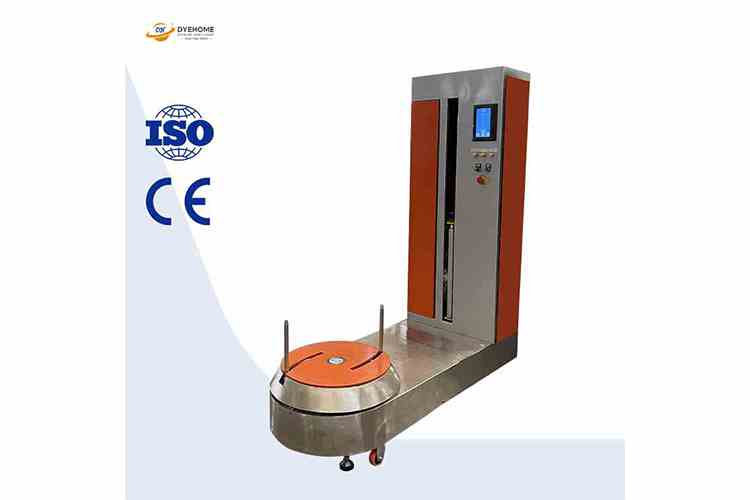
Airport Self-Service Luggage Wrapping Machine
view more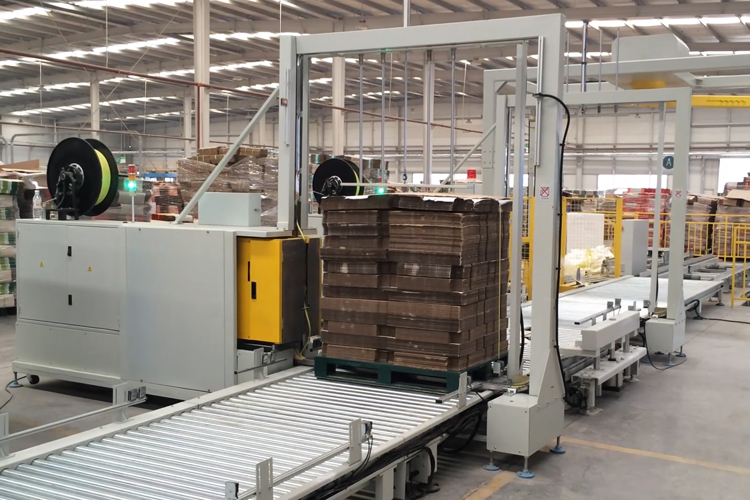
Automated film wrapping and packaging equipment
view more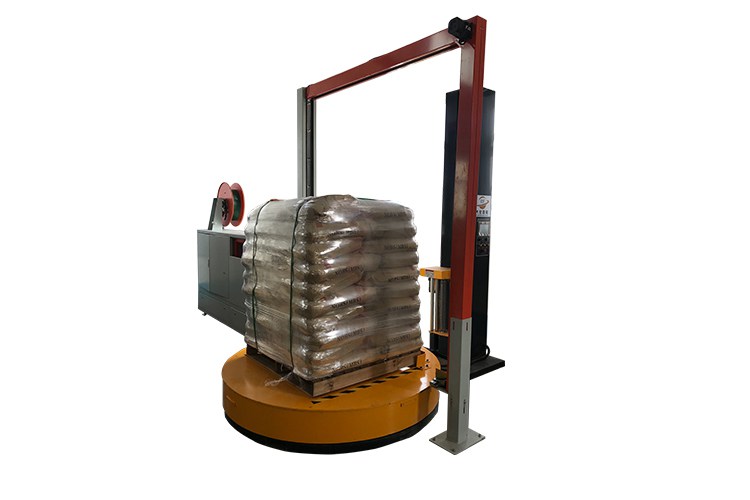
Sword-piercing baler and wrapping machine
view more
 Shandong Dyehome Intelligent Equipment Co.,Ltd
Phone:0086-17362172587
Whatsapp:+8617362172587
Email:machinedyehome@gmail.com
Add:Building 62, 3000 Meili East Road, DmiPark, Wujiapu Street, Huaiyin District, Jinan City,Shandong Province
Jinan Jiasen Packaging Equipment Co., LtdPhone:0086-15665802370
Add:High-end Equipment Manufacturing Industrial Park, East Industrial New Town, Ancheng Town, Pingyin County, Jinan City, Shandong Province
Shandong Golden Pack Intelligent Equipment Co.,LtdPhone:0086-15662690213
Add:High-end Equipment Manufacturing Industrial Park, East Industrial New Town, Ancheng Town, Pingyin County, Jinan City, Shandong Province
YoursIndustry
OurSolutions
OurServices
OurInformation