

Separate Strapping and Wrapping Reduce Efficiency? Integrated Strapping and Wrapping Machine Optimizes Pallet Packaging Process
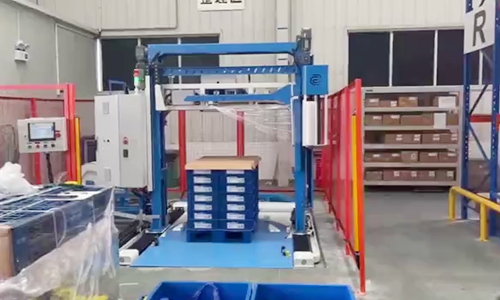
Optimizing the Outbound Packaging Process
Traditionally, pallet strapping and stretch wrapping are completed at separate stations. This process increases handling time and may cause workflow bottlenecks.
With an integrated design, pallets are positioned once and complete both strapping and wrapping automatically. This simplifies the process and improves packaging rhythm, especially during peak shipping periods.
Dual Reinforcement for Heavy Loads
In industries such as new energy batteries, construction materials, and chemical products, pallets are often heavy or stacked high. Stretch film alone may not provide sufficient structural strength, while strapping alone lacks full outer protection.
The integrated machine first applies vertical or horizontal straps to secure structural strength, then applies stretch film to create full external containment. This dual reinforcement enhances transportation stability, especially during long-distance shipping.
Reducing Labor Dependency
As labor costs increase, reducing manual intervention becomes essential. The integrated system performs strapping and wrapping automatically after the pallet is placed and the program is started.
Compared with traditional multi-station operations, this solution reduces manpower requirements while ensuring consistent packaging quality through preset parameters.
Seamless Integration with Automation Lines
The machine can connect with roller conveyors or chain conveyors. After palletizing, pallets automatically enter the integrated packaging station and then move to the staging area upon completion. This continuous workflow reduces forklift traffic and improves space utilization.
For manufacturers seeking automation upgrades, the strapping and wrapping integrated machine provides an efficient and structured packaging solution.
products
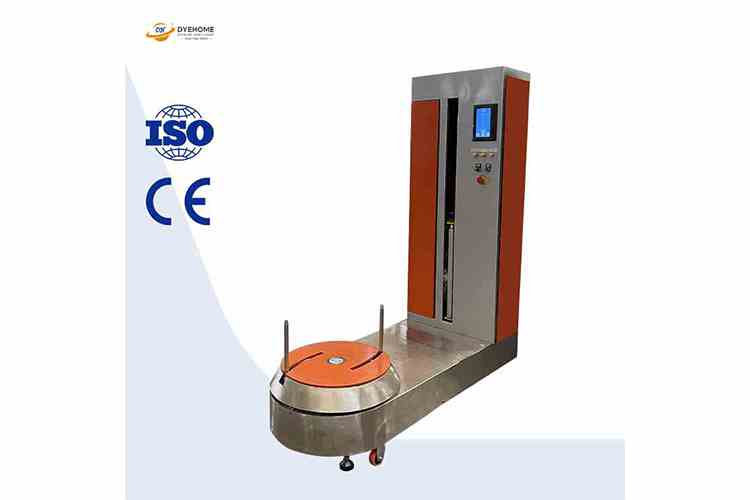
Airport Self-Service Luggage Wrapping Machine
view more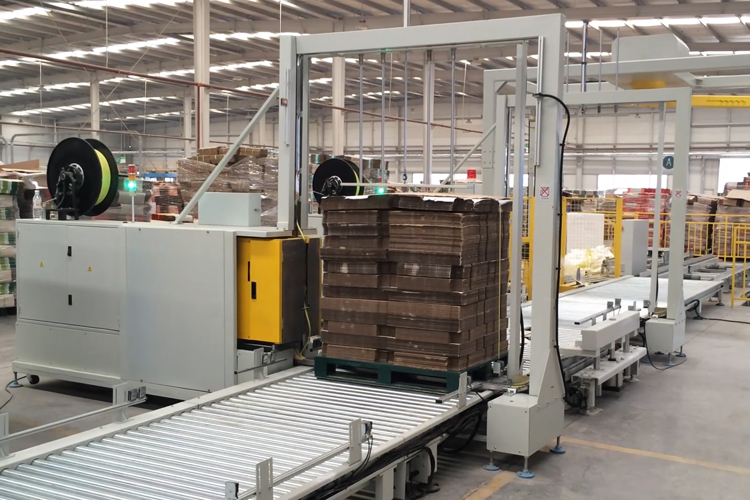
Automated film wrapping and packaging equipment
view more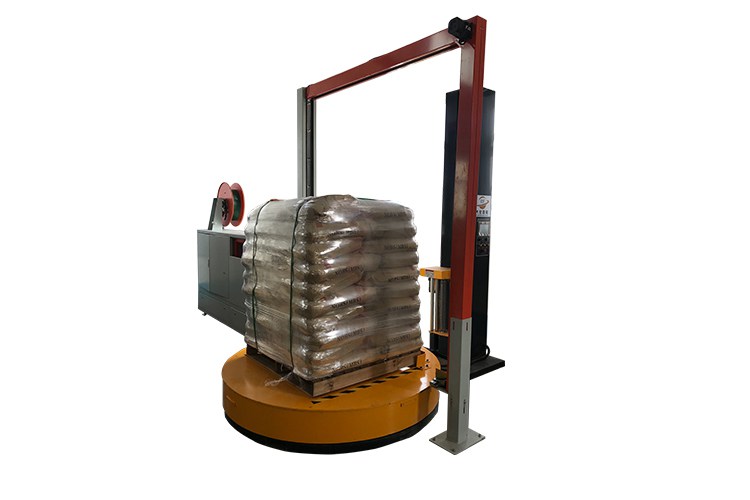
Sword-piercing baler and wrapping machine
view more
Pallet packaging equipment
view more
Fully automatic sword-piercing baler
view more
Online wrapping intelligent packaging machine
view more
M-type pallet wrapping machine
view more
Stretch film wrapping machine
view more
 Shandong Dyehome Intelligent Equipment Co.,Ltd
Phone:0086-17362172587
Whatsapp:+8617362172587
Email:machinedyehome@gmail.com
Add:Building 62, 3000 Meili East Road, DmiPark, Wujiapu Street, Huaiyin District, Jinan City,Shandong Province
Jinan Jiasen Packaging Equipment Co., LtdPhone:0086-15665802370
Add:High-end Equipment Manufacturing Industrial Park, East Industrial New Town, Ancheng Town, Pingyin County, Jinan City, Shandong Province
Shandong Golden Pack Intelligent Equipment Co.,LtdPhone:0086-15662690213
Add:High-end Equipment Manufacturing Industrial Park, East Industrial New Town, Ancheng Town, Pingyin County, Jinan City, Shandong Province
YoursIndustry
OurSolutions
OurServices
OurInformation