

Pallet Wrapper vs Hand Wrapping Savings: The Complete Cost Breakdown (2026)
The True Cost of Hand Wrapping Per Pallet
Before comparing, let's establish the real cost of wrapping pallets by hand. Most facilities only count the price of a stretch film roll. The full picture includes four cost categories.
1. Direct Film Cost
Hand wrapping typically uses 80–120 gauge film (thicker to prevent tearing during manual application), with a pre-stretch ratio of only 100–150% (limited by human force).
|
Hand Wrapping Film Metric |
Value |
|
Film gauge |
80–120 gauge (20–30 microns) |
|
Pre-stretch ratio |
100–150% |
|
Film used per pallet |
250–400 grams |
|
Cost per pallet (film only) |
$0.45–$0.65 |
|
Rolls consumed per 1,000 pallets |
55–80 rolls |
2. Direct Labor Cost
Manual wrapping takes 3–5 minutes per pallet. At an average warehouse wage of $18–$22/hour (U.S. Bureau of Labor Statistics, 2025), the labor cost per pallet adds up fast.
For a facility wrapping 50 pallets per day:
Time spent: 150–250 minutes (2.5–4.2 hours) of dedicated labor
Daily labor cost: $45–$92
Annual labor cost (250 working days): $11,250–$23,000
That is a single worker spending nearly half their shift walking around pallets with a film roll.
3. Transit Damage from Inconsistent Wrapping
Hand wrapping produces variable tension — different operators, different shifts, different results. Data from Robopac USA (2025) shows manual wrapping leads to 30–60% higher transit damage rates compared to machine wrapping.
Average damage claim per incident: $500–$2,000
Facilities reporting at least one damage claim per month: ~65% (industry survey)
4. Workplace Injury Costs
Manual wrapping involves repetitive bending, twisting, and walking — classified as a hazardous manual task in multiple jurisdictions.
|
Injury Cost Metric |
Data |
|
Overexertion injuries (U.S., 2022) |
241,900 days-away-from-work cases |
|
Average cost per injury |
$36,000 (medical + lost productivity) |
|
Warehouse injuries linked to repetitive wrapping |
~34% of soft-tissue injuries |
Sources: National Safety Council, Injury Facts 2023; Safe Work Australia, 2025.
What a Pallet Wrapper Changes: Cost-per-Pallet Breakdown
Now let's see how the numbers shift with a semi-automatic or fully automatic stretch wrapper.
1. Film Savings Through Pre-Stretch Technology
Machine wrapping uses powered pre-stretch rollers that elongate film 200–350% before application. This means you extract 2–4 times more usable film from every roll.
|
Machine Wrapping Film Metric |
Value |
|
Film gauge |
50–80 gauge (12–20 microns) |
|
Pre-stretch ratio |
200–350% |
|
Film used per pallet |
100–180 grams |
|
Cost per pallet (film only) |
$0.15–$0.35 |
|
Film reduction vs hand |
30–50% less |
For a facility wrapping 10,000 pallets per year, film savings alone amount to $2,000–$4,000 annually.
2. Labor Reduction: 70–80% Less Time Per Pallet
A semi-automatic turntable wrapper completes a pallet in 1–2 minutes with push-button operation. A fully automatic inline system processes 20–40 pallets per hour with minimal operator involvement.
For the same 50-pallet-per-day facility:
Machine time: 50–100 minutes (vs. 150–250 minutes by hand)
Daily labor cost: $15–$36 (vs. $45–$92)
Annual labor savings: $7,500–$14,000
Workers freed from wrapping can be redeployed to quality control, inventory management, or order fulfillment — tasks that directly generate revenue.
3. Transit Damage Reduction: 30–60% Fewer Claims
Machine-applied film delivers uniform, programmable containment force across every pallet, every shift, every day.
|
Damage Metric |
Hand Wrapping |
Machine Wrapping |
|
Tension consistency |
Variable (operator-dependent) |
Controlled, repeatable |
|
Load retention after 24h |
Baseline |
15–25% better |
|
Transit damage claims |
Higher rate |
30–60% reduction |
4. Injury Elimination
A stretch wrapper removes the repetitive motion entirely. No bending, no twisting, no walking around pallets. For facilities tracking workers' compensation premiums, eliminating even one serious back-strain claim ($12,000–$40,000) can exceed the annual cost of a semi-automatic machine.
Beyond Direct Savings: 5 Hidden Financial Benefits
The ROI calculation above captures the major cost categories. But experienced operations managers know the savings extend further.
1. Scalability Without Hiring
A machine wraps at consistent speed regardless of shift length, overtime availability, or labor market conditions. When order volume spikes, you don't need to hire temporary workers just for wrapping.
2. Consistent Quality = Fewer Chargebacks
Retail and food distribution customers increasingly reject poorly wrapped loads. Machine wrapping eliminates the variability that leads to chargebacks and returned shipments — a cost that rarely appears in internal calculations but can run $200–$1,000 per rejected delivery.
3. Lower Insurance Premiums
Facilities that automate repetitive manual tasks often see workers' compensation premium reductions of 10–25% within the first year. Some insurers offer specific discounts for automated palletizing and wrapping equipment.
4. Sustainability and ESG Compliance
Machine wrapping uses 30–50% less plastic film per pallet. For a facility wrapping 50 pallets daily, this prevents hundreds of kilograms of unnecessary LLDPE plastic from entering the waste stream annually. For companies with ESG reporting requirements or customers demanding environmental documentation, this is a measurable, reportable advantage.
5. Employee Retention and Morale
Eliminating the most physically demanding task in the warehouse improves job satisfaction and reduces turnover. Given that replacing a warehouse worker costs $3,000–$7,000 in recruiting and training (Workforce Institute, 2025), retaining even one additional employee per year offsets a meaningful portion of the machine investment.
H2: When Hand Wrapping Still Makes Sense (Honest Assessment)
To be transparent, machine wrapping is not always the right answer. Hand wrapping remains appropriate when:
Daily volume is below 10 pallets — the ROI timeline extends beyond 24 months
Loads are highly irregular — odd shapes or mixed-height pallets may require manual flexibility
Capital is severely constrained — though rental and lease options exist from most manufacturers
Space is extremely limited — though semi-automatic turntable wrappers require only a 4×4 ft footprint
For operations in the "gray zone" (10–30 pallets/day), a semi-automatic turntable wrapper ($3,000–$8,000) offers the fastest payback with minimal infrastructure requirements.
FAQ
Q: How much does a pallet wrapper save compared to hand wrapping per pallet?
A: A pallet wrapper typically saves $0.30–$0.60 per pallet when combining film savings (30–50% less film consumption), labor reduction (70–80% less time), and lower damage rates. For a facility wrapping 50 pallets daily, this translates to $7,500–$15,000 in annual savings.
Q: How long does it take for a stretch wrapper to pay for itself?
A: For most mid-size operations (10,000+ pallets/year), a stretch wrapper pays for itself in 8–14 months. High-volume facilities (30,000+ pallets/year) often achieve payback in 6–12 months. Small warehouses wrapping 3,000 pallets annually typically see payback within 12–18 months.
Q: Is hand wrapping cheaper for small operations?
A: Hand wrapping appears cheaper only at very low volumes (under 10 pallets/day). Even at 10–20 pallets daily, the combined labor and film waste costs exceed machine wrapping expenses. A semi-automatic turntable wrapper ($3,000–$8,000) delivers positive ROI within 12–18 months even at modest volumes.
products
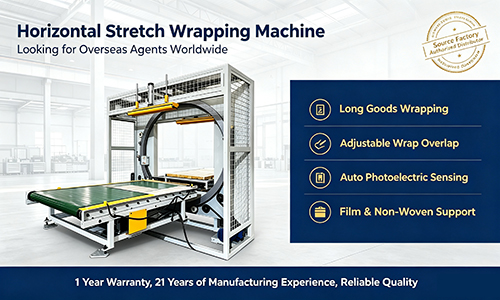
Horizontal Stretch Wrapping Machine SP1000 for Pipes
view more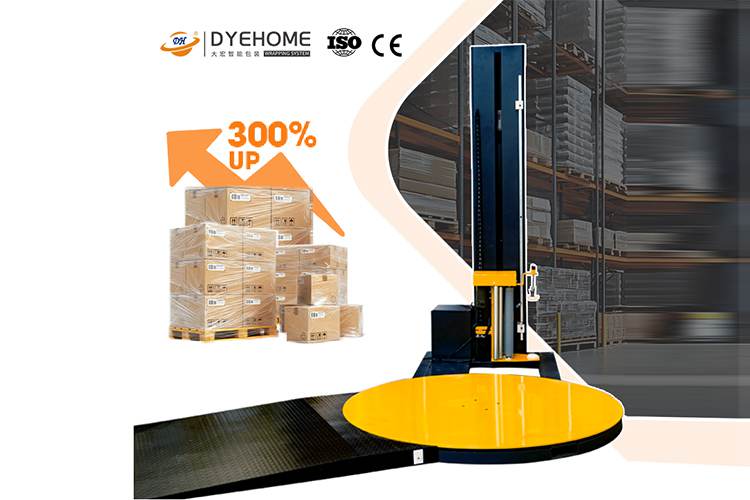
Pallet Stretch Wrapping Machine
view more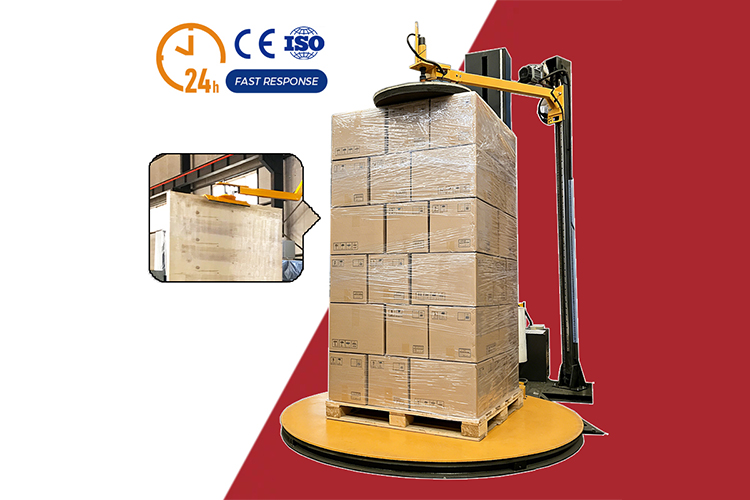
Top Press Pallet Stretch Wrapping Machine
view more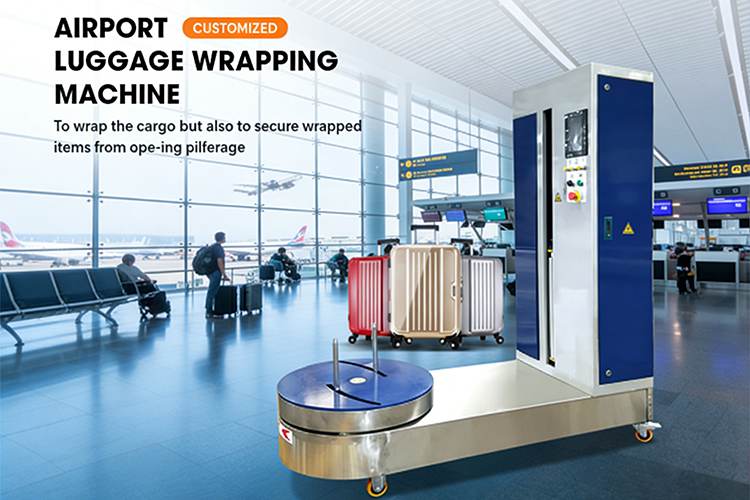
Luggage Wrapping Machine for Airports
view more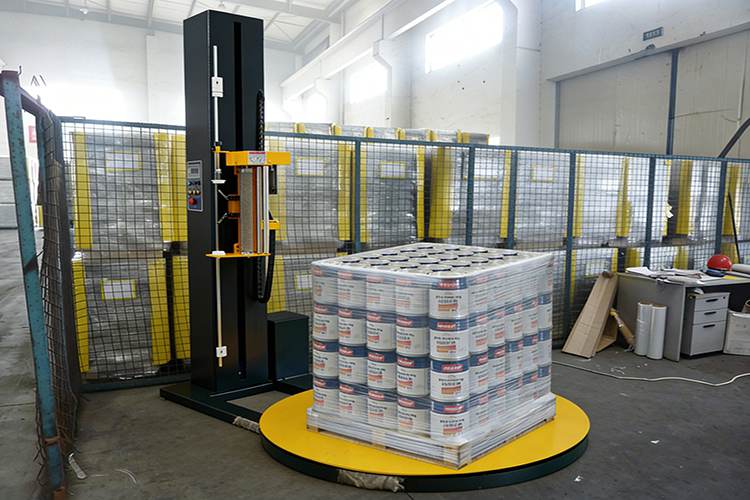
Pallet Stretch Wrapping Machine for Canned Goods
view more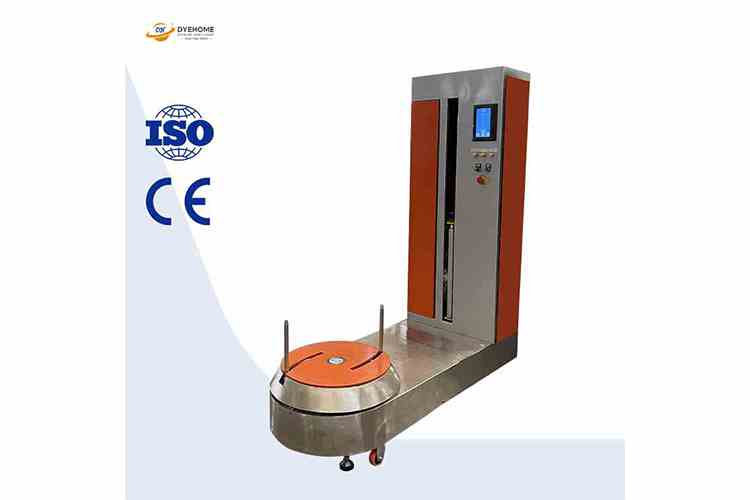
Airport Self-Service Luggage Wrapping Machine
view more
Automated film wrapping and packaging equipment
view more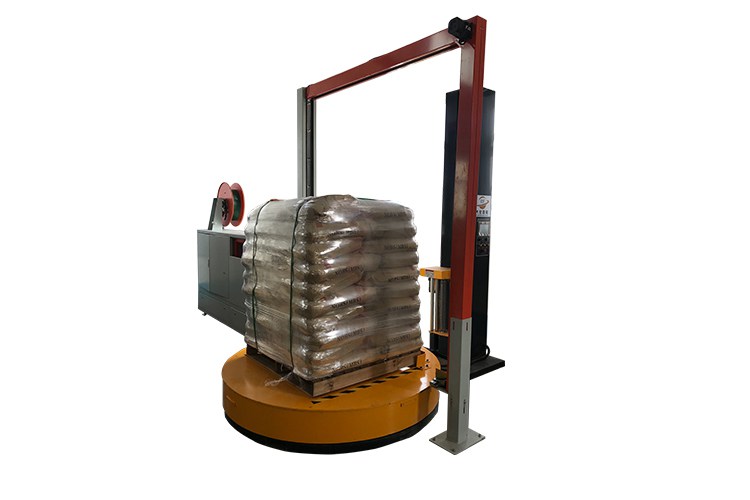
Sword-piercing baler and wrapping machine
view more
 Shandong Dyehome Intelligent Equipment Co.,Ltd
Phone:0086-17362172587
Whatsapp:+8617362172587
Email:machinedyehome@gmail.com
Add:Building 62, 3000 Meili East Road, DmiPark, Wujiapu Street, Huaiyin District, Jinan City,Shandong Province
Jinan Jiasen Packaging Equipment Co., LtdPhone:0086-15665802370
Add:High-end Equipment Manufacturing Industrial Park, East Industrial New Town, Ancheng Town, Pingyin County, Jinan City, Shandong Province
Shandong Golden Pack Intelligent Equipment Co.,LtdPhone:0086-15662690213
Add:High-end Equipment Manufacturing Industrial Park, East Industrial New Town, Ancheng Town, Pingyin County, Jinan City, Shandong Province
YoursIndustry
OurSolutions
OurServices
OurInformation