

Orbital vs Turntable Stretch Wrapper: Which Is Right for Your Loads?
If you're shopping for stretch wrapping equipment, you've likely encountered two very different machine designs: turntable stretch wrappers and orbital (horizontal) stretch wrappers. Both apply stretch film to secure loads for shipping, but they solve fundamentally different packaging problems.
Choose the wrong type, and you'll end up with either overpriced equipment that doesn't fit your product shape, or a machine that damages goods and creates more problems than it solves.
In this guide, we'll break down how each machine works, what load types they're designed for, and how to decide which one belongs in your facility — including throughput, cost, footprint, and real-world industry applications.
What Is an Orbital Stretch Wrapper?
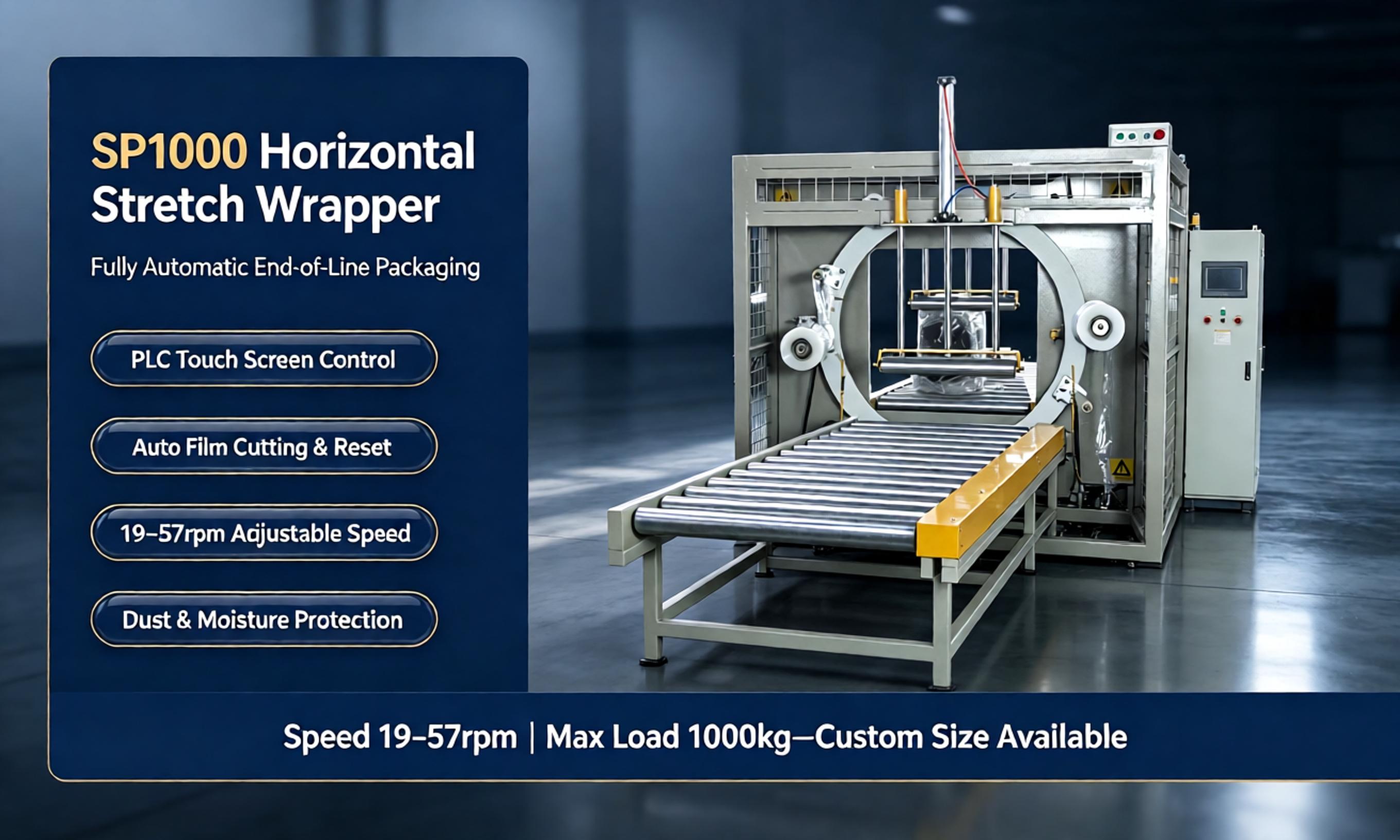
An orbital stretch wrapper (also called a horizontal stretch wrapper or ring wrapper) applies stretch film horizontally around a product as it passes through a rotating ring. The film carriage is mounted on a spinning ring structure, and the product moves linearly through the ring on a conveyor — wrapping the film in a spiral pattern, much like the grip on a tennis racket handle.
Key characteristics of orbital wrappers:
Film is applied horizontally (perpendicular to the load's travel direction)
The product moves through a stationary rotating ring
No turntable or pallet is required — products can be wrapped directly
Ring diameter is customizable based on product dimensions
Ideal for long, narrow, or irregularly shaped products that don't fit on standard pallets
Orbital wrappers come in various ring sizes — from small 400mm rings for narrow profiles to large 2,000mm+ rings for oversized building material bundles. High-speed models can reach ring speeds of 50–350 RPM, with line speeds up to 30 meters per minute (FROMM Packaging technical data).
What Is a Turntable Stretch Wrapper?
A turntable stretch wrapper is the most common type of pallet wrapping machine. The pallet load sits on a rotating turntable platform that spins at 12–15 RPM, while a film carriage moves up and down a vertical mast to apply stretch film evenly from bottom to top.
Key characteristics of turntable wrappers:
Film is applied vertically around a rotating pallet load
The pallet spins while the film delivery system moves up/down
Requires stable, balanced palletized loads
Standard weight capacities of 4,000–6,000 lbs (1,800–2,700 kg)
Ideal for standard pallet loads in warehouses and distribution centers
According to Lantech, a leading stretch wrapper manufacturer, 9 out of 10 stretch wrappers sold are turntable models — they're the workhorse of standard pallet wrapping operations and generally cost less than alternatives.
Orbital vs Turntable: Head-to-Head Comparison
To help you visualize the differences, here's a comprehensive comparison across 8 critical dimensions:
|
Dimension |
Orbital Stretch Wrapper |
Turntable Stretch Wrapper |
|
Wrapping Direction |
Horizontal (film wraps around product length) |
Vertical (film wraps around pallet circumference) |
|
Load Type |
Long, narrow, non-palletized: pipes, profiles, panels, tubes, lumber, doors |
Standard palletized loads: boxes, cases, bags on pallets |
|
How It Works |
Product passes through a rotating ring on a conveyor |
Pallet spins on a turntable; film carriage moves vertically |
|
Throughput |
2–20 m/min line speed (depends on product length & overlap); up to 70 packs/min for high-speed models |
20–40 pallets/hr (semi-auto); 40–60+ pallets/hr (fully auto) |
|
Footprint |
Longer footprint (ring + infeed/outfeed conveyor); 4–8m+ length |
Compact circular footprint; 2–3m diameter |
|
Equipment Cost |
$15,000–$60,000+ (varies by ring size & automation) |
$5,000–$15,000 (semi-auto); $60,000–$80,000 (fully auto) |
|
Load Stability Requirement |
Low — product moves linearly, no spinning forces |
High — load must be stable enough to spin at 12–15 RPM |
|
Best For Industry |
Building materials, aluminum profiles, steel pipes, flooring, furniture |
Food & beverage, warehousing, logistics, consumer goods, chemicals |
5 Key Differences You Need to Understand
Let's dig deeper into the most important distinctions between these two machine types.
1. Load Shape & Palletization Requirements
This is the #1 deciding factor.
Turntable wrappers are designed exclusively for palletized, relatively square/rectangular loads. If your product ships on standard GMA pallets (48"×40") or Euro pallets (800×1200mm), a turntable wrapper is almost always the right choice.
Orbital wrappers are designed for non-palletized, long, or irregularly shaped products. Think aluminum extrusion profiles that are 6 meters long, steel pipe bundles, door frames, flooring bundles, or furniture components. These products simply cannot be wrapped on a turntable — they're too long, too narrow, or not palletized at all.
Industry insight: HVAC contractors and building material manufacturers are among the fastest-growing adopters of orbital wrappers. According to TAB Industries research, automated orbital wrapping reduces per-pallet labor cost from $4.65 to $0.44 — an annual savings of over $27,000 for operations wrapping 25 loads daily (source: John Maye Company).
2. Throughput & Production Speed
Speed comparisons are tricky because the two machines measure throughput differently:
Turntable wrapper speed is measured in pallets per hour. Semi-automatic models handle 20–30 pallets/hr; fully automatic inline systems can reach 40–60+ pallets/hr.
Orbital wrapper speed is measured in meters per minute or pieces per minute. Standard models run at 2–20 m/min line speed, while high-speed orbital systems (like Colines AllWrapper) can achieve 70 packs per minute for high-volume production.
For standard pallets, turntable wrappers are generally faster per cycle. For long products where turntable wrapping isn't even possible, orbital wrappers are the only automation option — and they're dramatically faster than hand wrapping.
3. Floor Space & Facility Layout
Turntable wrappers have a compact, roughly circular footprint — typically 2–3 meters in diameter. Semi-automatic models can even be moved with a forklift, making them flexible for multi-location use. They fit well between dock doors — a popular configuration.
Orbital wrappers require a longer, linear footprint. You need space for the wrapping ring plus infeed and outfeed conveyor sections. Total length can range from 4 meters for small standalone units to 10+ meters for fully integrated production lines.
If floor space is tight and you're wrapping standard pallets, turntable wins. If you're wrapping long profiles and have a linear production flow, orbital fits naturally into the line.
4. Load Stability & Product Protection
Turntable wrappers rotate the entire load. This creates centrifugal force that can cause shifting, especially for tall, light, or unstable loads. Loads must be well-stacked and balanced. For unstable loads, many operations add a top platen (press) to hold the load down during wrapping.
Orbital wrappers move the product linearly through the ring — no spinning, no centrifugal force. This is gentler on the product. The wrapping action itself applies even, consistent tension around the bundle. For long, fragile products like aluminum profiles or finished doors, orbital wrapping provides superior protection against scratches and surface damage compared to manual taping or strapping.
How to Choose: A 4-Step Decision Framework
Use this simple framework to determine which machine type fits your operation:
Step 1: What Are You Wrapping?
Ask yourself:
Is my product palletized and roughly square/rectangular? → Turntable is likely your answer.
Is my product long, narrow, cylindrical, or non-palletized? → Orbital is probably what you need.
Do you wrap both standard pallets and long products? → You may need both types of machines for different production lines.
Step 2: What's Your Daily Volume?
Low volume (<20 loads/day): A semi-automatic turntable or entry-level orbital may suffice
Medium volume (20–50 loads/day): Look at automatic models with film tail cut/clamp
High volume (50+ loads/day): Fully automated inline systems with conveyor integration
Step 3: What's Your Budget?
Under $10,000: Semi-automatic turntable wrapper (for pallets) or used equipment
$10,000–$30,000: Mid-range turntable automatics or entry-level orbital wrappers
$30,000–$60,000: High-end turntable systems or mid-range orbital with conveyor integration
$60,000+: Fully automated lines for either type, custom configurations
Step 4: What's Your Facility Layout?
Limited floor space, dock-door wrapping: Turntable (compact footprint)
Linear production line with long products: Orbital (integrates with production flow)
Need flexibility to move the machine: Semi-automatic turntable (portable)
Industry Applications: Where Each Machine Shines
Where Turntable Wrappers Dominate
Food & Beverage Manufacturing
Turntable wrappers are the standard in food and beverage plants wrapping case-picked pallets of canned goods, beverages, and packaged foods. They handle Type A (stable, uniform) loads efficiently and reliably at 30–40 pallets per hour.
Warehousing & 3PL Distribution
Distribution centers wrapping mixed-SKU pallets rely on turntable wrappers for their versatility and compact footprint. Many 3PLs deploy semi-automatic turntable machines at multiple dock doors for flexible shipping operations.
Chemical & Paper Products
For stable pallet loads of chemical drums, paper rolls (wrapped upright), and bagged goods, turntable wrappers provide consistent containment force at an affordable price point.
Where Orbital Wrappers Excel
Building Materials & Construction Products
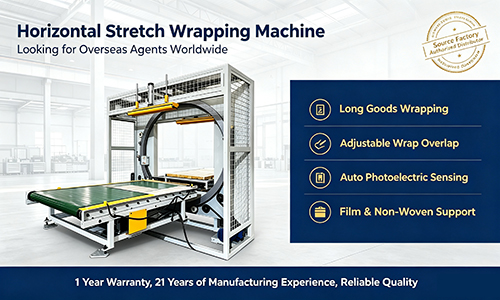
Aluminum profiles, PVC pipes, steel tubes, window frames, and roofing panels are all classic applications for horizontal orbital wrappers. Dyehome's horizontal stretch wrapping machines, for example, are specifically designed for building materials and profile industries, with ring sizes customizable to product dimensions.
Flooring & Furniture Manufacturing
Laminate flooring bundles, wooden door frames, and furniture components benefit from the gentle, scratch-free wrapping that orbital machines provide. The spiral wrap pattern protects surfaces during long-haul shipping.
Steel & Metal Processing
Steel bar bundles, copper tube coils, and metal extrusion profiles require robust wrapping to prevent corrosion and damage in transit. Orbital wrappers with heavy-duty ring structures handle the weight and abrasiveness of metal products.
What About Rotary Arm Wrappers?
You might also encounter rotary arm (straddle) wrappers — a third type where the load stays stationary and an arm rotates around it. These are a middle ground between turntable and orbital:
They wrap vertical pallet loads (like turntable)
But the load doesn't spin (like orbital philosophy)
Best for very heavy, fragile, or unstable pallets (over 5,000 lbs)
More expensive than turntable but still for palletized loads
If you're deciding between orbital and turntable, rotary arm is probably not your answer — it's an alternative when turntable can't handle the load stability, but the product is still palletized.
Dyehome's Stretch Wrapper Solutions
Shandong Dyehome Intelligent Equipment Co., Ltd. manufactures both turntable and orbital (horizontal) stretch wrapping machines, serving customers in over 80 countries worldwide with 21+ years of packaging equipment experience.
For standard pallet wrapping, Dyehome offers turntable stretch wrappers ranging from economical semi-automatic models to fully automatic inline systems with conveyor integration — all featuring 200–250% powered pre-stretch and PLC control.
For long product wrapping, Dyehome's horizontal orbital stretch wrapping machine line handles products from small profiles to large building material bundles:
Ring diameters customizable from 800mm to 2,000mm+
Wrapping speeds of 20–40 pallets/hour (equivalent throughput)
PLC control with touchscreen HMI
Automatic film clamping, cutting, and frame reset
Pre-stretch technology up to 250% for film savings
Safety features including light curtains and protective covers
Conveyor integration for fully automated production lines
Dyehome specializes in end-of-line packaging solutions — from unpacking and sealing to palletizing and stretch wrapping — making them a single-source supplier for complete packaging automation projects.
Frequently Asked Questions
Q: Can an orbital wrapper wrap standard pallets?
A: Technically yes, but it's not efficient or cost-effective. Orbital wrappers are designed for horizontal wrapping of long products. Standard pallets are better served by turntable or rotary arm machines, which are faster and cheaper for vertical pallet wrapping. Orbital wrappers are specialized equipment — use them where turntables can't go.
Q: How do I know if my load is stable enough for a turntable wrapper?
A: A good rule of thumb: if you can push the top of your pallet load by hand and it doesn't shift or wobble significantly, it's probably stable enough for turntable wrapping at standard 12–15 RPM speeds. Tall, narrow, or top-heavy loads may need a top platen option or a rotary arm machine instead.
Q: What's the typical payback period for an orbital stretch wrapper?
A: For operations currently wrapping long products by hand (or with manual taping), orbital wrapper payback typically ranges from 12–24 months. The biggest savings come from labor reduction (often 2–3 workers per shift redeployed elsewhere), reduced film waste, and lower damage claims. Operations wrapping 20+ bundles per day generally see the fastest ROI.
Q: Can orbital wrappers handle very heavy products?
A: Yes, but the conveyor system must be sized appropriately. Heavy steel bundles or large pipe assemblies require heavy-duty roller conveyors and reinforced ring structures. Standard orbital machines handle 50–100kg bundles; heavy-duty models can support much higher weights. Always specify your product weight range when requesting a quote.
Q: Which machine uses less stretch film?
A: Both types use powered pre-stretch systems (200–300% is standard on modern machines), so film efficiency is comparable when each is used for its intended application. The biggest film waste comes from using the wrong machine type — trying to wrap long profiles on a turntable (which doesn't work) or wrapping small pallets on an oversized orbital machine (inefficient).
Final Recommendation
Choosing between an orbital and turntable stretch wrapper comes down to one question: what are you wrapping?
Choose a turntable wrapper if you wrap standard pallet loads of boxed, cased, or bagged products. It's the most cost-effective, space-efficient, and proven solution for pallet wrapping — which is why 90% of stretch wrappers sold are turntable models.
Choose an orbital (horizontal) wrapper if you wrap long, narrow, or non-palletized products like pipes, profiles, panels, tubing, lumber, or doors. Turntable machines simply can't handle these load shapes, and orbital automation delivers dramatic labor savings versus hand wrapping.
If you have both types of products, invest in both machine types for different production lines — they serve complementary roles in a complete packaging operation.
products
Horizontal Stretch Wrapping Machine SP1000 for Pipes
view more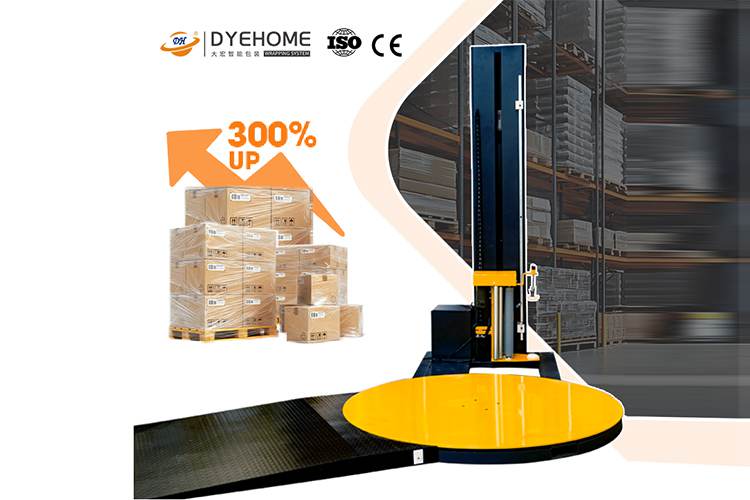
Pallet Stretch Wrapping Machine
view more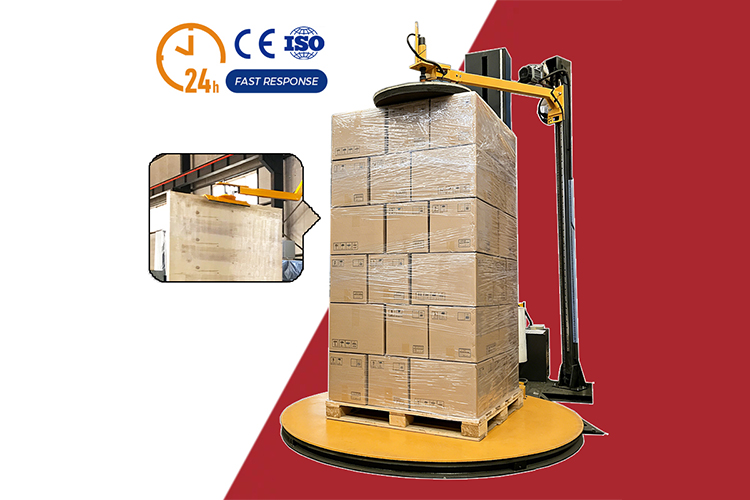
Top Press Pallet Stretch Wrapping Machine
view more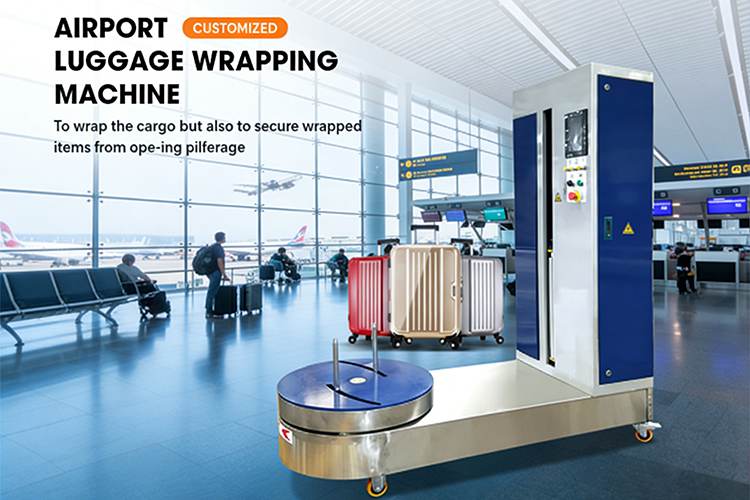
Luggage Wrapping Machine for Airports
view more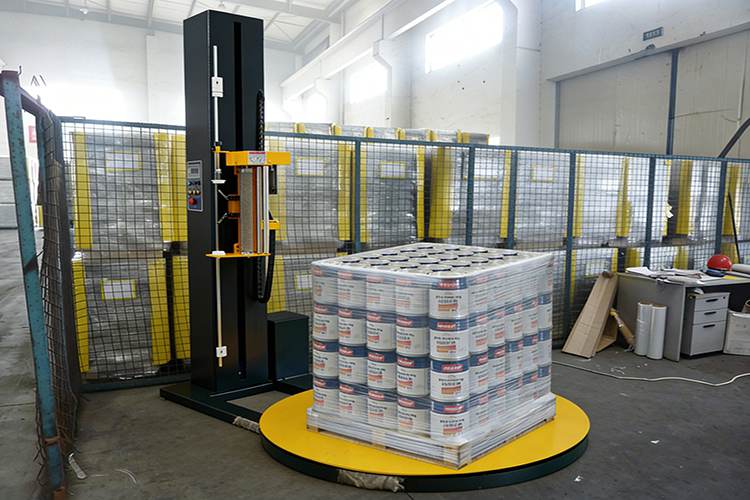
Pallet Stretch Wrapping Machine for Canned Goods
view more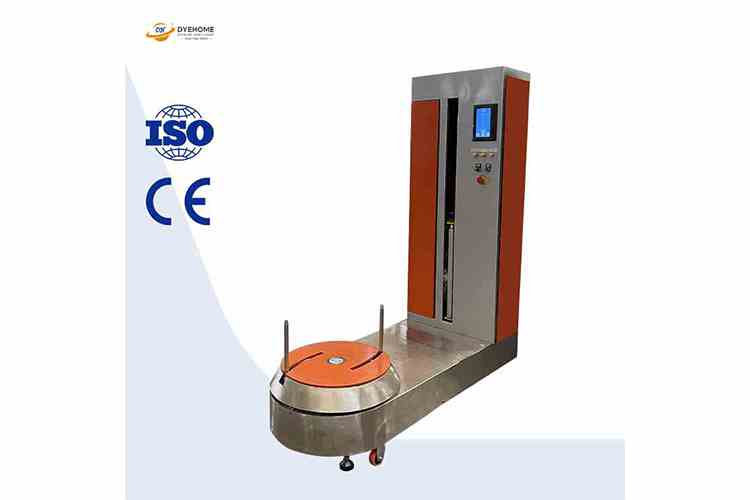
Airport Self-Service Luggage Wrapping Machine
view more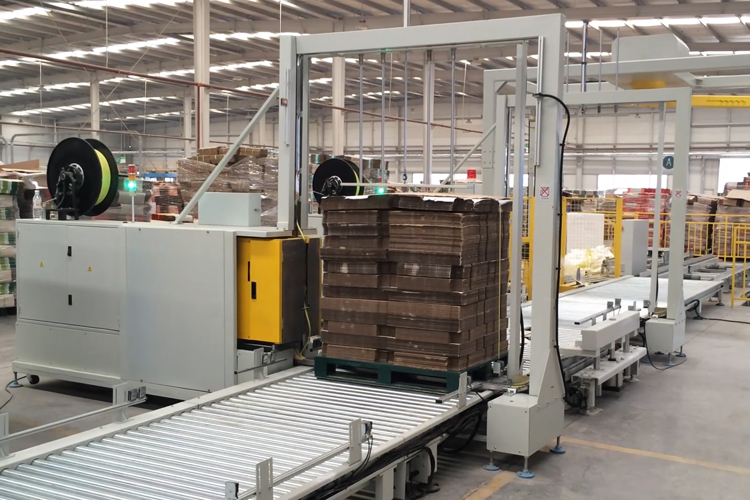
Automated film wrapping and packaging equipment
view more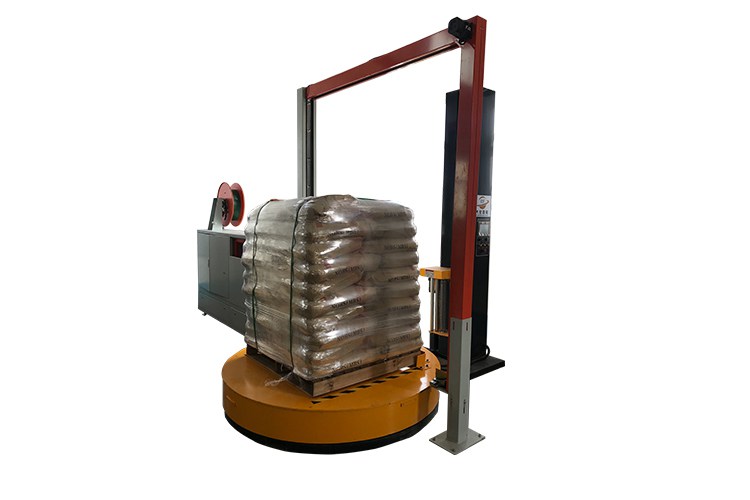
Sword-piercing baler and wrapping machine
view more
 Shandong Dyehome Intelligent Equipment Co.,Ltd
Phone:0086-17362172587
Whatsapp:+8617362172587
Email:machinedyehome@gmail.com
Add:Building 62, 3000 Meili East Road, DmiPark, Wujiapu Street, Huaiyin District, Jinan City,Shandong Province
Jinan Jiasen Packaging Equipment Co., LtdPhone:0086-15665802370
Add:High-end Equipment Manufacturing Industrial Park, East Industrial New Town, Ancheng Town, Pingyin County, Jinan City, Shandong Province
Shandong Golden Pack Intelligent Equipment Co.,LtdPhone:0086-15662690213
Add:High-end Equipment Manufacturing Industrial Park, East Industrial New Town, Ancheng Town, Pingyin County, Jinan City, Shandong Province
YoursIndustry
OurSolutions
OurServices
OurInformation