

How Can Large Quantities of Panels Be Packaged Continuously? Automatic Panel Wrapping Machines Are Gaining More Attention
Why Are Panel Products Easily Damaged During Transportation?
In industries such as gypsum board manufacturing, decorative panels, furniture boards, and building materials, products are often characterized by large dimensions, long lengths, and vulnerable edges. From production lines to customer sites, panels go through multiple stages including stacking, forklift handling, warehousing, and transportation.
Without adequate packaging protection, edge chipping, surface scratches, moisture penetration, and contamination can occur. Many manufacturers have found that customer complaints are often caused not by product quality issues but by damage during transportation. As a result, improving packaging protection has become a growing concern across the industry.
Why Is Manual Packaging No Longer Suitable for High-Volume Shipments?
Many manufacturers traditionally rely on manual wrapping, hand strapping, or simple packaging methods. While these approaches may work for small production volumes, they often struggle to meet the demands of large-scale operations.
Building material manufacturers frequently ship products by truckload or container load, requiring fast and consistent packaging. Manual operations not only increase labor intensity but also make it difficult to maintain consistent wrapping quality. For companies with continuous shipping schedules, packaging can easily become a production bottleneck.
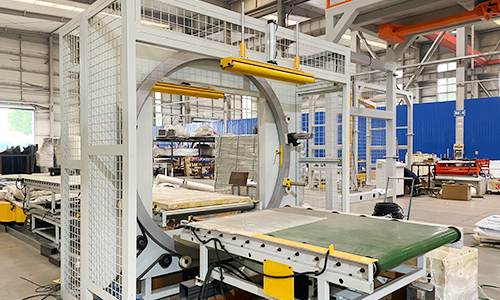
Panel wrapping machines combine automatic conveying systems with ring-type wrapping technology, allowing packaging materials to be applied uniformly around the product. This enables continuous and automated packaging suitable for high-volume production environments.
Why Is Dust and Moisture Protection Becoming More Important?
In addition to transportation impacts, environmental factors can also affect panel quality. During storage, outdoor loading, and long-distance transportation, products may be exposed to dust, humidity, and other contaminants.
Decorative panels often require pristine surface conditions, gypsum boards can be sensitive to moisture, and furniture panels need to maintain an attractive appearance. Insufficient packaging protection may result in product damage, increased waste, and costly rework.
By using stretch film, non-woven fabric, or composite wrapping materials, panel wrapping machines create a protective layer around the product, improving dust-proof, moisture-proof, and contamination-resistant performance.
Automation Is Driving Packaging Upgrades in the Building Materials Industry
As automation continues to expand throughout the building materials sector, packaging operations are also evolving. More manufacturers are integrating packaging equipment with conveying systems, palletizing systems, and production lines to improve overall logistics efficiency.
Horizontal wrapping machines can be customized according to product dimensions and integrated with roller conveyors or belt conveyor systems. This enables automatic conveying, automatic wrapping, and continuous packaging processes. For large-scale manufacturers, automated packaging not only improves efficiency but also enhances warehouse and logistics management.
Panel Wrapping Machines Are Becoming Essential Equipment for Modern Manufacturers
As competition in the building materials industry intensifies, manufacturers are placing greater emphasis on delivery quality and packaging standardization. Packaging is no longer simply the final production step; it has become a critical component in reducing transportation damage, improving customer satisfaction, and protecting product quality.
By providing automated and continuous wrapping solutions, panel wrapping machines help minimize edge damage and environmental contamination while improving transportation protection. They are widely used in gypsum board, calcium silicate board, furniture panel, and decorative building material industries, making them an important investment for modern packaging operations.
products
Pallet Stretch Wrapping Machine
view more
Top Press Pallet Stretch Wrapping Machine
view more
Luggage Wrapping Machine for Airports
view more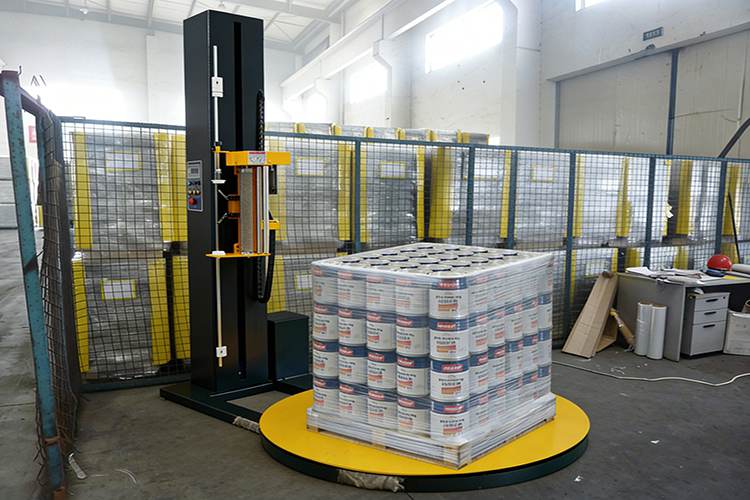
Pallet Stretch Wrapping Machine for Canned Goods
view more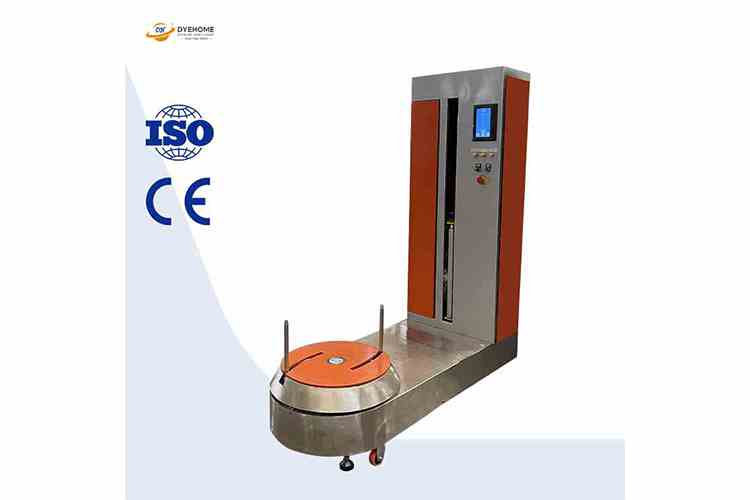
Airport Self-Service Luggage Wrapping Machine
view more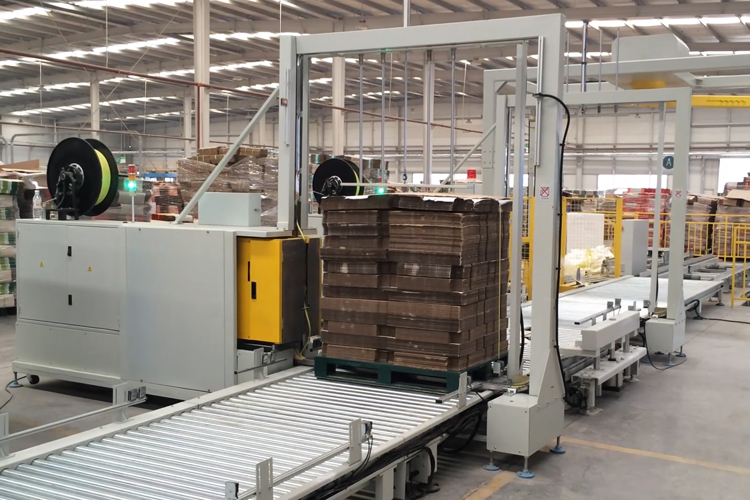
Automated film wrapping and packaging equipment
view more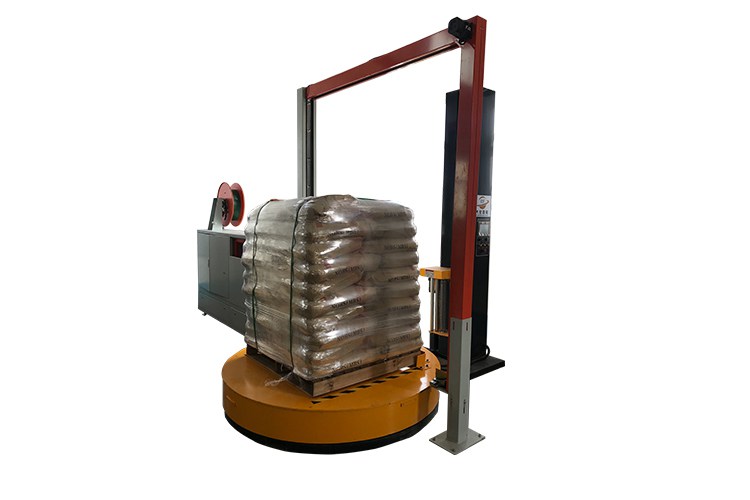
Sword-piercing baler and wrapping machine
view more
Pallet packaging equipment
view more
 Shandong Dyehome Intelligent Equipment Co.,Ltd
Phone:0086-17362172587
Whatsapp:+8617362172587
Email:machinedyehome@gmail.com
Add:Building 62, 3000 Meili East Road, DmiPark, Wujiapu Street, Huaiyin District, Jinan City,Shandong Province
Jinan Jiasen Packaging Equipment Co., LtdPhone:0086-15665802370
Add:High-end Equipment Manufacturing Industrial Park, East Industrial New Town, Ancheng Town, Pingyin County, Jinan City, Shandong Province
Shandong Golden Pack Intelligent Equipment Co.,LtdPhone:0086-15662690213
Add:High-end Equipment Manufacturing Industrial Park, East Industrial New Town, Ancheng Town, Pingyin County, Jinan City, Shandong Province
YoursIndustry
OurSolutions
OurServices
OurInformation