

Are Your Goods Vulnerable to Rain and Moisture? Top Sheet Wrapping Machines Are Becoming the Preferred Solution
Why Is Top Protection Becoming Increasingly Important?
In traditional pallet packaging, many companies focus only on side wrapping while overlooking top protection.
During outdoor storage, warehouse transfer, and transportation, the top surface of a pallet is often the most exposed to rain, dust, and environmental contamination.
For food, beverages, paper products, chemicals, and building materials, moisture intrusion can damage packaging appearance and even affect product quality.
As shipping distances increase, more companies are seeking complete pallet protection solutions.
Why Can't Standard Stretch Wrapping Solve Top Moisture Problems?
Conventional wrapping machines secure the sides of pallet loads but leave the top exposed.
During outdoor handling, port transportation, or long-term storage, rainwater and dust can easily penetrate from above.
This is particularly problematic during rainy seasons and in humid climates, where wet cartons, damaged packaging, and product deterioration become common concerns.
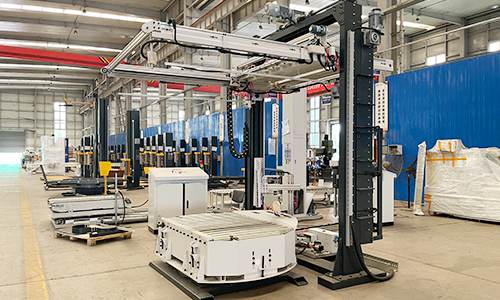
Top sheet wrapping machines solve this issue by automatically applying a top cover and securing it with stretch film.
Why Is Automated Top Cover Packaging Becoming More Popular?
As shipment volumes increase, manual top-sheet placement is becoming less practical.
Traditionally, workers manually place a plastic sheet over the pallet before wrapping. This process is labor-intensive and often inconsistent.
A top sheet wrapping machine automatically detects pallet height, applies the top sheet, and secures it with stretch film, ensuring consistent and efficient packaging.
Automation Is Driving Demand for Top Sheet Packaging
With the growth of automated palletizing, conveyor systems, and smart warehouses, companies are seeking fully automated packaging solutions.
Top sheet wrapping machines can be equipped with automatic film attachment, cutting, and wiping systems and integrated with conveyor lines for fully automated operation.
Packaging capacity typically ranges from 10–20 pallets per hour, making these systems ideal for high-volume shipping environments.
Top Sheet Wrapping Machines Are Becoming a Key Part of Modern Packaging Systems
As transportation quality standards continue to rise, packaging is no longer just about load stabilization—it is also about environmental protection.
By combining top-sheet coverage with stretch wrapping, top sheet wrapping machines provide five-sided protection, improve moisture resistance, enhance transportation stability, and reduce logistics-related losses.
They are increasingly used in food, beverage, paper, chemical, building materials, and logistics industries as part of modern packaging systems.
FAQ
Q1: What is the difference between a top sheet wrapping machine and a standard wrapping machine?
A standard wrapping machine secures the sides of the load, while a top sheet wrapping machine also covers the top surface, providing five-sided protection.
Q2: Which industries commonly use top sheet wrapping machines?
Food, beverage, chemical, paper, building materials, electronics, appliances, and logistics industries.
Q3: What is the packaging capacity?
Typically 10–20 pallets per hour depending on load size and packaging requirements.
Q4: Can the machine perform automatic film attachment and cutting?
Yes. Automatic film attachment, cutting, and film wiping systems are available.
Q5: What types of products are best suited for top-cover packaging?
Carton pallets, food products, beverages, chemicals, paper products, building materials, and any goods exposed to outdoor transportation or long-term storage.
products
Online wrapping intelligent packaging machine
view more
pallet film wrapping machine
view more
Top film wrapping machine
view more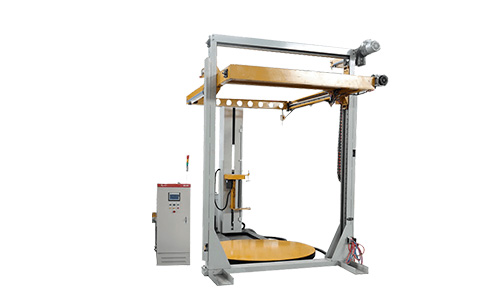
Pallet top laminating machine
view more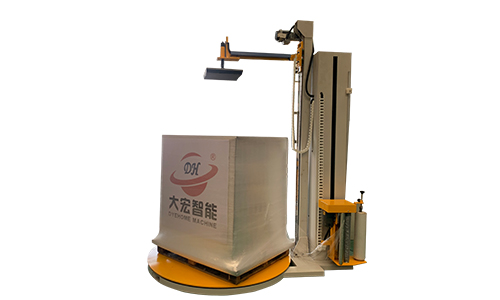
wrapping packaging machine with pressure plate
view more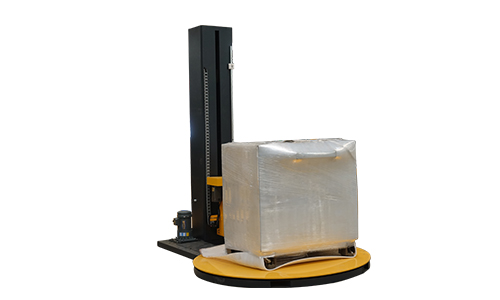
automatic pallet wrapping packaging machine
view more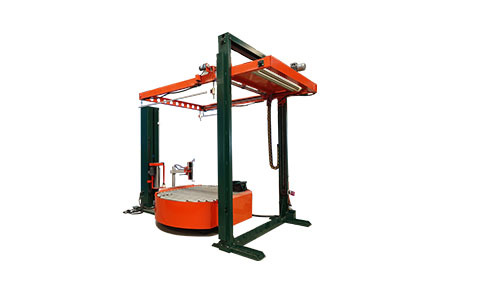
plastic wrapper with top sheeter
view more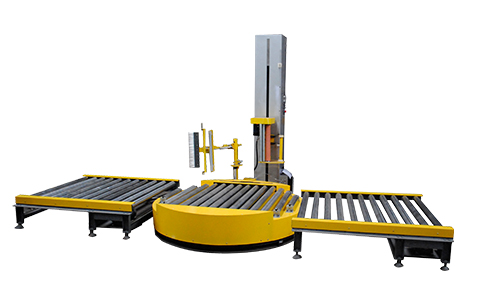
online tray wrapping winding machine
view more
 Shandong Dyehome Intelligent Equipment Co.,Ltd
Phone:0086-17362172587
Whatsapp:+8617362172587
Email:machinedyehome@gmail.com
Add:Building 62, 3000 Meili East Road, DmiPark, Wujiapu Street, Huaiyin District, Jinan City,Shandong Province
Jinan Jiasen Packaging Equipment Co., LtdPhone:0086-15665802370
Add:High-end Equipment Manufacturing Industrial Park, East Industrial New Town, Ancheng Town, Pingyin County, Jinan City, Shandong Province
Shandong Golden Pack Intelligent Equipment Co.,LtdPhone:0086-15662690213
Add:High-end Equipment Manufacturing Industrial Park, East Industrial New Town, Ancheng Town, Pingyin County, Jinan City, Shandong Province
YoursIndustry
OurSolutions
OurServices
OurInformation