

8 Types of Stretch Wrapping Machines: Which Is Right for Your Business?
A stretch wrapping machine is an automated or semi-automated device that applies stretch film around palletized loads to secure them for storage, transportation, and handling. With the global pallet wrapper market projected to exceed $3.2 billion by 2027 (per Grand View Research), choosing the right machine type has become a critical operational decision for warehouses, manufacturing plants, and distribution centers worldwide.
Understanding the different types of stretch wrapping machines is the first step toward selecting equipment that matches your throughput, load characteristics, budget, and automation level. This guide breaks down 8 major types of stretch wrapping equipment, explains how each works, compares their key specifications, and helps you determine which one best fits your operational requirements.
Quick Decision Framework: 5 Questions to Ask Before Buying
Before diving into each machine type, answer these five questions to narrow down your options:
How many pallets do you wrap per day? (< 20 → semi-auto; 20-80 → automatic turntable; 80+ → rotary arm or inline)
What are your load dimensions and weight? (Unstable/heavy loads → rotary arm; standard pallets → turntable)
Do you need to integrate with an existing conveyor line? (Yes → inline/online system; No → standalone)
What's your available floor space? (Limited → turntable; generous → rotary arm or horizontal)
What's your budget range? ($3K-$8K → semi-auto; $8K-$25K → automatic turntable; $25K+ → rotary arm/inline)
Type 1: Turntable Stretch Wrappers
Turntable stretch wrappers — also called rotary table wrappers — are the most common type of automatic pallet wrapping machine. The pallet sits on a rotating turntable platform while a film carriage moves vertically, wrapping the stretch film around the load as the platform spins.
How It Works
1. Place a pallet on the turntable using a forklift
2. The film tail is automatically clamped and secured at the bottom
3. The turntable rotates while the film carriage rises (top wrap) and descends (bottom wrap)
4. Film is cut and secured automatically at the end of the cycle
5. Operator removes the wrapped pallet with a forklift
Key Specifications
|
Parameter |
Typical Range |
|
Turntable diameter |
1,500 – 2,000 mm |
|
Max load weight |
1,500 – 3,000 kg |
|
Wrapping speed |
25 – 40 pallets/hour |
|
Max wrap height |
2,000 – 2,800 mm |
|
Pre-stretch ratio |
200% – 300% |
Pros
Lower cost compared to rotary arm machines
Simple operation and maintenance
Good for standard pallet sizes and stable loads
Available in semi-automatic and fully automatic configurations
Cons
Not ideal for unstable or very light loads (centrifugal force can shift load)
Turntable rotation limits maximum weight capacity
Slower than rotary arm or inline systems
Floor space required around the machine for forklift access
Best For
Manufacturing plants wrapping 20-80 pallets per day
Distribution centers with standard 1,200×1,000 mm or 48×40 inch pallets
Facilities with stable, uniformly stacked loads
Dyehome offers a full range of turntable stretch wrappers, from entry-level semi-automatic models to high-performance automatic machines with 300% pre-stretch capability. Our T1650F automatic turntable wrapper handles up to 2,000 kg loads and wraps up to 35 pallets per hour.
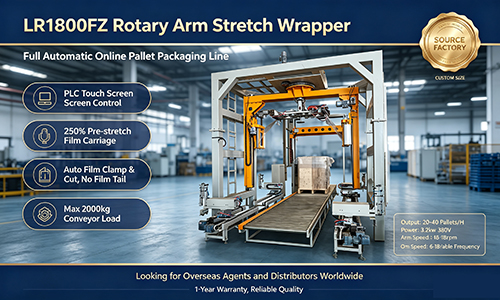
Type 2: Rotary Arm Stretch Wrappers
Rotary arm stretch wrappers — also called cantilever wrappers — keep the pallet stationary while a rotating arm swings around the load, applying film from a moving carriage. This design eliminates any movement of the load itself, making it ideal for unstable or very heavy pallets.
How It Works
1. Pallet is positioned in the wrapping zone (no rotation)
2. Film clamp secures the film tail at the bottom
3. The rotary arm rotates 360° around the pallet while the film carriage ascends and descends
4. Film is cut and heat-sealed or clamped at the end
5. Wrapped pallet is removed from the stationary position
Key Specifications
|
Parameter |
Typical Range |
|
Arm rotation diameter |
2,000 – 3,500 mm |
|
Max load weight |
3,000 – 10,000+ kg |
|
Wrapping speed |
30 – 60 pallets/hour |
|
Max wrap height |
2,500 – 3,500 mm |
|
Pre-stretch ratio |
250% – 300% |
Pros
No load movement — perfect for unstable, fragile, or very heavy loads
Higher throughput than turntable machines
Can handle very heavy pallets (up to 10 tons or more)
Better wrap consistency for tall loads
Cons
Higher upfront cost than turntable wrappers
Larger footprint required for the rotating arm
More complex mechanics = higher maintenance
Requires more ceiling height clearance
Best For
Chemical industry with heavy drum pallets
Building materials with tall, unstable loads
High-volume warehouses needing 50+ pallets/hour
Fragile products that cannot tolerate rotation
For heavy-load and high-speed applications, Dyehome's R1800 rotary arm stretch wrapper delivers up to 60 pallets per hour and handles loads up to 5,000 kg. Its heavy-duty steel frame and precision bearing system ensure reliable 24/7 operation.
Learn more: Turntable vs Rotary Arm Stretch Wrapper: Complete Comparison 2026
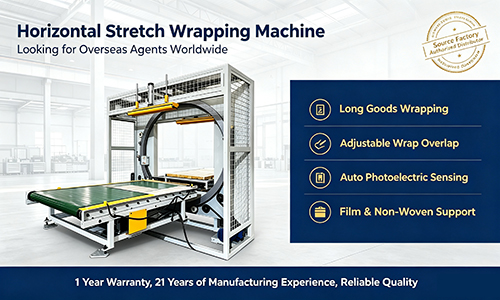
Type 3: Horizontal / Orbital Stretch Wrappers
Horizontal stretch wrappers — also known as orbital wrappers or ring wrappers — apply stretch film horizontally around products or bundles as they pass through a rotating ring. Unlike pallet wrappers, these machines wrap long, linear, or irregularly shaped products that can't be wrapped on a turntable.
How It Works
1. Product is fed through the center of a rotating ring on a conveyor
2. The ring holds a film roll and rotates around the product
3. Stretch film is spirally applied as the product moves forward at a controlled speed
4. The number of wraps and overlap are adjustable via PLC control
5. Wrapped product exits the other end of the machine
Key Specifications
|
Parameter |
Typical Range |
|
Ring diameter |
400 – 1,500 mm |
|
Max product length |
Unlimited (continuous wrapping) |
|
Wrapping speed |
10 – 40 m/min (conveyor speed) |
|
Film width |
250 – 750 mm |
|
Suitable products |
Profiles, pipes, panels, furniture, doors |
Pros
Wraps long products that cannot be pallet-wrapped
Secures bundles of profiles, pipes, panels, and furniture
Provides full 360° protection for linear products
Can be integrated into production lines
Cons
Not suitable for standard pallet loads
Product-specific sizing (ring diameter must match product dimensions)
More complex setup and changeover
Narrower range of applications
Best For
Aluminum profile manufacturers and steel pipe mills
Furniture and door producers
Building materials (aluminum windows, curtain walls)
Long, linear products requiring full circumferential wrapping
Dyehome's horizontal stretch wrapper series covers ring diameters from 400 mm to 1,500 mm, handling everything from small aluminum profiles to large furniture assemblies. Our H600 model is widely used in the building materials industry for wrapping aluminum profiles and PVC pipes.
Type 4: Semi-Automatic Stretch Wrappers
Semi-automatic stretch wrappers are entry-level machines that automate the film application process but require an operator to initiate the cycle, attach the film start, and cut the film at the end. They sit between hand wrapping and fully automatic systems.
How It Works
1. Operator places pallet on turntable with a forklift
2. Operator manually attaches film tail to the pallet
3. Operator presses start — machine rotates and lifts the carriage automatically
4. At the end of the cycle, the machine stops at the bottom
5. Operator manually cuts the film and secures the tail
Key Specifications
|
Parameter |
Typical Range |
|
Turntable / Arm type |
Both available |
|
Max load weight |
2,000 – 5,000 kg |
|
Wrapping speed |
30 – 60 pallets/hour |
|
Max wrap height |
2,200 – 3,000 mm |
|
Pre-stretch ratio |
250% – 300% |
Pros
Lowest entry cost ($3,000 – $8,000)
Reduces physical labor compared to hand wrapping
Improves wrap consistency over manual methods
Simple operation, minimal training required
Cons
Requires an operator for every cycle
Slower throughput than fully automatic machines
Film savings are lower (typically 150-200% pre-stretch vs 250-300%)
Less consistent wrap quality due to manual film attachment
Best For
Small businesses wrapping 5-20 pallets per day
Operations looking to upgrade from hand wrapping
Facilities with limited budget for fully automatic equipment
Seasonal or low-volume production
Dyehome's S1650 semi-automatic stretch wrapper provides an affordable entry point to automated wrapping, with a 200% pre-stretch system that cuts film usage by approximately 50% compared to hand wrapping.
Related reading: How to Choose a Stretch Wrapping Machine: 10-Step Buying Guide 2026
Type 5: Fully Automatic Stretch Wrappers
Fully automatic stretch wrappers handle the entire wrapping cycle without any manual intervention — from film clamping and wrapping to cutting and securing the film tail. They can be standalone with forklift loading or integrated into conveyor lines.
Key Features
Automatic film clamp — grabs and secures film at the start
Automatic film cut & wipe — cuts film and presses the tail onto the load
PLC control with touchscreen — easy parameter adjustment
Multiple wrap programs — adjustable for different load types
Photoelectric height sensing — automatically detects load height
Key Specifications
|
Parameter |
Typical Range |
|
System type |
Rotary arm or turntable with conveyor |
|
Conveyor height |
300 – 600 mm |
|
Max load weight |
1,500 – 5,000 kg |
|
Throughput |
40 – 100+ pallets/hour |
|
Integration |
Full PLC line synchronization |
Pros
Labor-free operation — one operator can manage multiple machines
Highest film savings (250-300% pre-stretch ratios)
Consistent, repeatable wrap quality
Can be integrated with conveyor systems
Cons
Higher investment ($8,000 – $40,000+)
More complex maintenance
Requires trained personnel for setup and adjustment
Longer ROI period compared to semi-automatic
Best For
Mid-to-large manufacturing plants with 40+ pallets/day
Facilities with dedicated packaging personnel
Operations seeking to maximize film cost savings
Plants planning to integrate with end-of-line automation
Type 6: Online / Inline Stretch Wrapping Systems
Online stretch wrapping machines — also called inline wrappers or conveyorized wrappers — are fully integrated into production or distribution conveyor lines. Pallets automatically enter the wrapping zone, get wrapped, and exit to the next station without any forklift handling.
How It Works
1. Pallet arrives via powered conveyor from upstream production
2. Photoelectric sensors detect the pallet and trigger the wrapping cycle
3. Either a rotary arm wraps the stationary pallet, or a turntable with built-in conveyor rotates the load
4. After wrapping, the pallet automatically conveys out to downstream (warehouse, truck loading)
5. The entire process is PLC-controlled and synchronized with the line speed
Key Specifications
|
Parameter |
Typical Range |
|
Turntable diameter |
800 – 1,200 mm |
|
Max luggage size |
800×600×900 mm (H×W×D) |
|
Max weight |
80 – 150 kg |
|
Wrapping speed |
10 – 20 pieces/hour |
|
Film width |
300 – 500 mm |
Pros
Highest throughput for high-volume operations
Complete automation — no manual handling in the packaging area
Reduces forklift traffic and improves safety
Integrates seamlessly with end-of-line packaging systems
Cons
Highest cost ($30,000 – $100,000+)
Requires conveyor integration and facility planning
Longer installation and commissioning time
Less flexible for changing product mix
Best For
High-volume manufacturing (100+ pallets/day)
Automated end-of-line packaging systems
Food and beverage production lines
E-commerce fulfillment centers with conveyor systems
Dyehome designs and manufactures complete end-of-line packaging systems, including online stretch wrappers integrated with case erectors, sealers, palletizers, and conveyor systems. Our solutions serve food & beverage, chemical, and 3PL industries worldwide.
Type 7: Luggage / Baggage Stretch Wrappers
Luggage stretch wrappers are specialized machines designed to wrap individual suitcases, bags, and parcels for airline travel, shipping, or storage protection. They are commonly found in airports, hotels, shipping centers, and logistics facilities.
How It Works
1. Luggage is placed on a small rotating turntable
2. Operator attaches the film and starts the machine
3. The turntable rotates while the film carriage moves vertically
4. The machine wraps the entire piece of luggage in stretch film
5. Operator cuts the film and removes the protected luggage
Key Specifications
|
Parameter |
Typical Range |
|
Hood width range |
800 – 1,600 mm |
|
Max load height |
1,500 – 2,500 mm |
|
Wrapping speed |
80 – 200 pallets/hour |
|
Film type |
Tubular stretch hood film |
|
Outdoor suitability |
Excellent — fully weatherproof |
Pros
Protects luggage from scratches, dirt, moisture, and tampering
Provides theft deterrence and tamper evidence
Generates revenue for airports and service providers
Compact footprint for airport concourse placement
Cons
Niche application — only for luggage/small parcels
Lower throughput than industrial pallet wrappers
Not suitable for heavy industrial loads
Manual or semi-automatic operation common
Best For
Airports and airline baggage handling
Hotels and resorts offering luggage protection services
Shipping and courier centers
Logistics facilities wrapping individual items
Dyehome's LW800 luggage wrapping machine is widely used in airports and logistics centers worldwide. Its compact design and stainless steel construction make it ideal for high-traffic public environments.
Type 8: Stretch Hood Wrapping Machines
Stretch hood machines apply a tubular stretch film hood over the top of a pallet load, pulling it down tightly to provide both vertical and horizontal containment. While technically a different technology than conventional spiral wrapping, they serve the same load-securement purpose for high-volume applications.
How It Works
1. A roll of tubular stretch film is fed through the hooding head
2. The film is opened and stretched to fit over the pallet load
3. The hood descends over the load, pulling the film tightly around the sides
4. The film is cut and the bottom edge is tucked under the pallet
5. The result is a weatherproof, tightly secured pallet load
Key Specifications
Parameter Typical Range
Hood width range 800 – 1,600 mm
Max load height 1,500 – 2,500 mm
Wrapping speed 80 – 200 pallets/hour
Film type Tubular stretch hood film
Outdoor suitability Excellent — fully weatherproof
Pros
Highest throughput of any stretch wrapping technology
Superior weather protection (fully enclosed top and sides)
Excellent load stability for long-haul transport
Low film consumption per pallet
Cons
Very high capital cost ($100,000+)
Requires specialized tubular film (more expensive per kg)
Limited flexibility for different pallet sizes
Large footprint and ceiling height requirements
Best For
Very high-volume distribution centers (500+ pallets/day)
Beverage industry — bottled water, soft drinks, beer
Outdoor storage and long-haul transportation
Operations requiring maximum load protection
Comparison Table: 8 Types of Stretch Wrappers at a Glance
|
Machine Type |
Throughput (pallets/hr) |
Max Load Weight |
Investment Level |
Best Application |
Automation Level |
|
Turntable |
25-40 |
1,500-3,000 kg |
$$ |
Standard pallets, stable loads |
Semi / Full Auto |
|
Rotary Arm |
30-60 |
3,000-10,000 kg |
$$$ |
Heavy/unstable loads, high volume |
Full Auto |
|
Horizontal |
N/A (meters/min) |
N/A |
$$ |
Long products: profiles, pipes, furniture |
Semi / Full Auto |
|
Semi-Automatic |
15-25 |
1,000-2,000 kg |
$ |
Low volume, hand-wrap upgrade |
Semi-Auto |
|
Fully Automatic |
30-60 |
2,000-5,000 kg |
$$$ |
Mid-to-high volume, labor savings |
Full Auto |
|
Online/Inline |
40-100+ |
1,500-5,000 kg |
$$$$ |
Conveyor lines, end-of-line integration |
Fully Integrated |
|
Luggage Wrapper |
10-20 pieces/hr |
80-150 kg |
$ |
Airports, hotels, shipping centers |
Semi-Auto |
|
Stretch Hood |
80-200 |
1,500-2,000 kg |
$$$$$ |
High-volume beverage, outdoor storage |
Fully Automatic |
How to Select the Right Type for Your Operation
Step 1: Determine Your Volume
Volume is the single biggest driver of machine type selection:
< 20 pallets/day: Semi-automatic turntable wrapper
20-80 pallets/day: Automatic turntable wrapper
80-150 pallets/day: Rotary arm wrapper or dual turntable system
150+ pallets/day: Inline system or stretch hood machine
Step 2: Assess Your Load Characteristics
Stable, standard pallets → Turntable wrapper
Heavy, unstable, or fragile loads → Rotary arm wrapper
Long or non-palletized products → Horizontal/orbital wrapper
Individual items/suitcases → Luggage wrapper
Beverage/weatherproof needs → Stretch hood
Step 3: Evaluate Automation Needs
Just getting started → Semi-automatic (lowest risk)
Reducing labor costs → Fully automatic turntable
Full end-of-line automation → Online/inline system
Max throughput (beverage, high-volume) → Stretch hood
Step 4: Consider Total Cost of Ownership (TCO)
Don't just look at purchase price. Calculate the 3-year total cost including:
Film consumption (higher pre-stretch = lower film cost)
Labor savings
Maintenance and spare parts
Energy consumption
Downtime risk
products
Horizontal Stretch Wrapping Machine SP1000 for Pipes
view more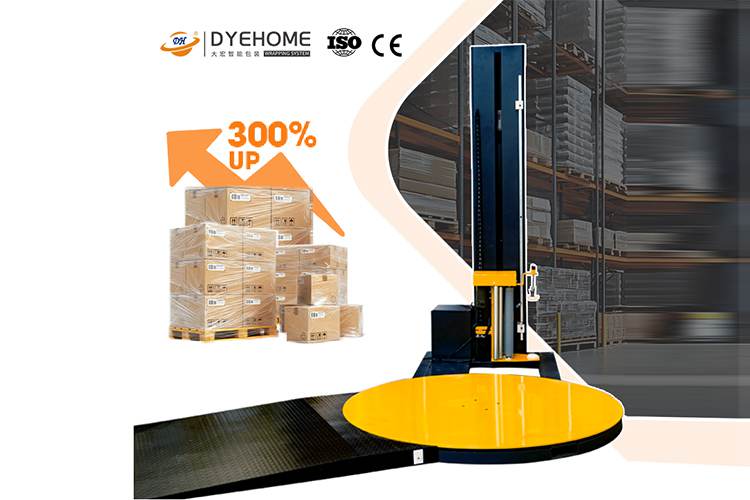
Pallet Stretch Wrapping Machine
view more
Top Press Pallet Stretch Wrapping Machine
view more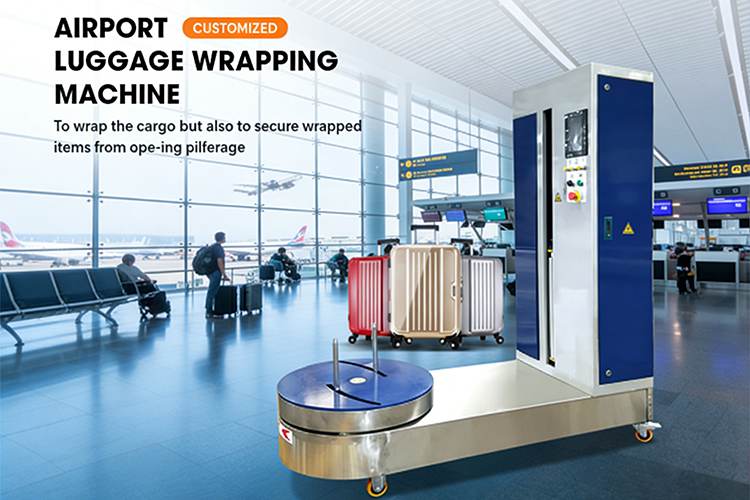
Luggage Wrapping Machine for Airports
view more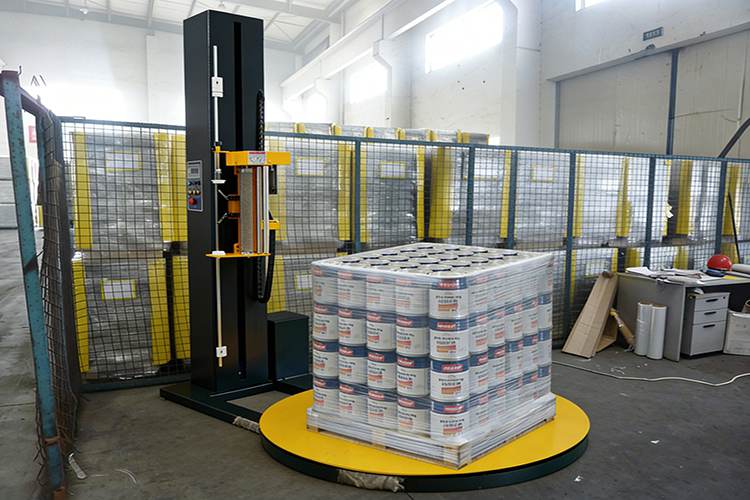
Pallet Stretch Wrapping Machine for Canned Goods
view more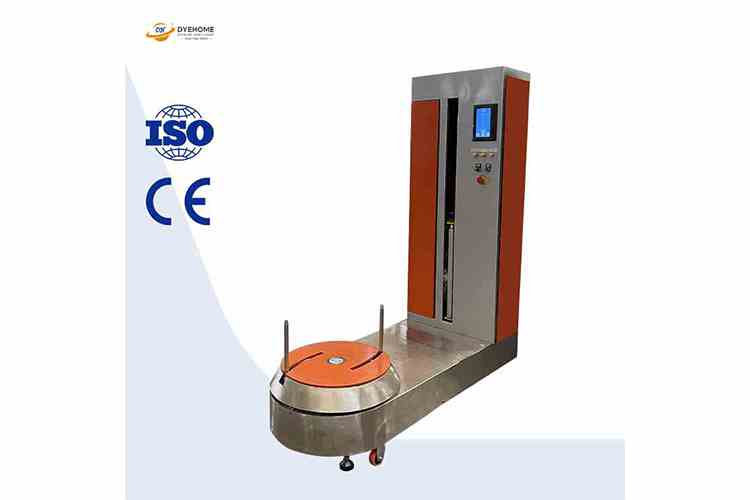
Airport Self-Service Luggage Wrapping Machine
view more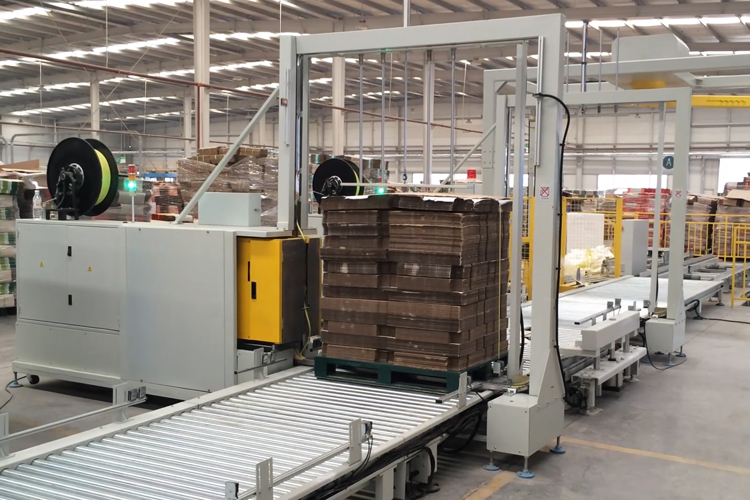
Automated film wrapping and packaging equipment
view more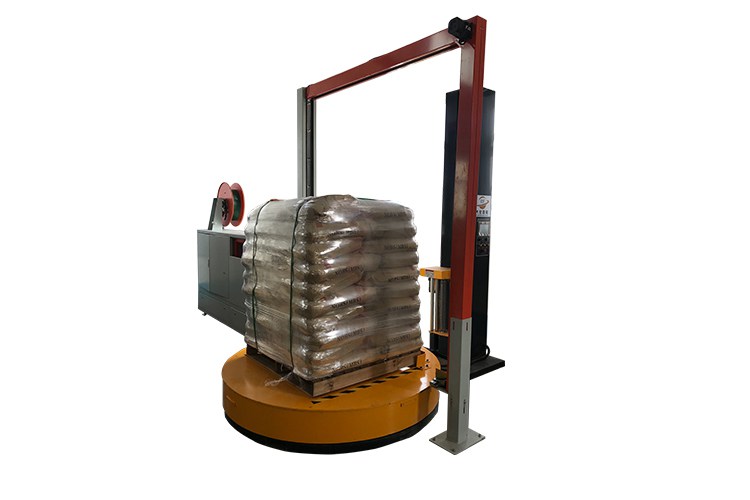
Sword-piercing baler and wrapping machine
view more
 Shandong Dyehome Intelligent Equipment Co.,Ltd
Phone:0086-17362172587
Whatsapp:+8617362172587
Email:machinedyehome@gmail.com
Add:Building 62, 3000 Meili East Road, DmiPark, Wujiapu Street, Huaiyin District, Jinan City,Shandong Province
Jinan Jiasen Packaging Equipment Co., LtdPhone:0086-15665802370
Add:High-end Equipment Manufacturing Industrial Park, East Industrial New Town, Ancheng Town, Pingyin County, Jinan City, Shandong Province
Shandong Golden Pack Intelligent Equipment Co.,LtdPhone:0086-15662690213
Add:High-end Equipment Manufacturing Industrial Park, East Industrial New Town, Ancheng Town, Pingyin County, Jinan City, Shandong Province
YoursIndustry
OurSolutions
OurServices
OurInformation